 The First Encyclopedia Your First Knowledge Home
Songhai Empire: History and Facts
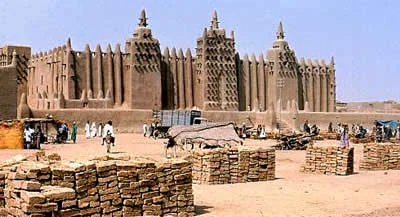
Songhai Empire: History and Facts
Where was the Songhai Empire located?
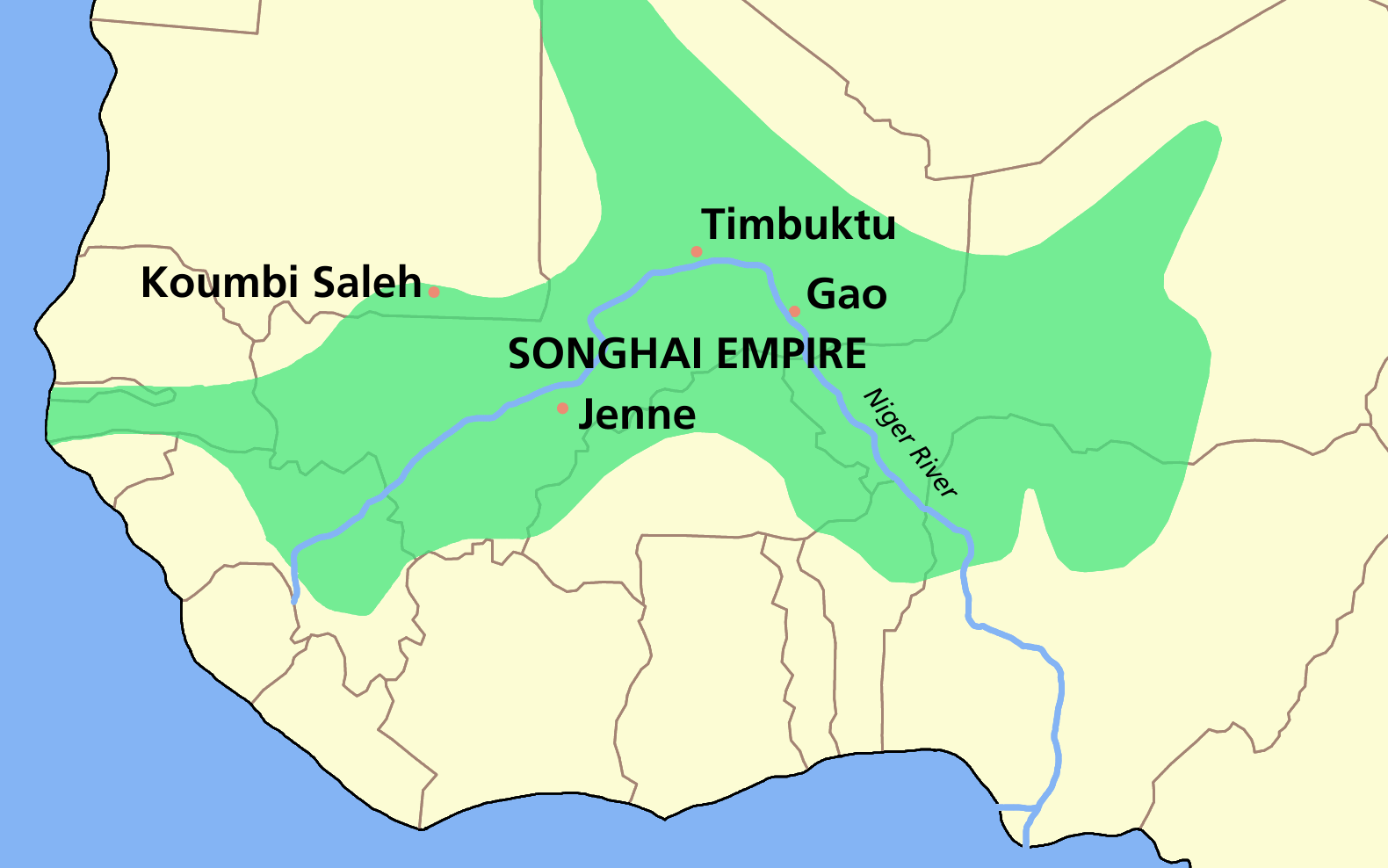
Situated along the Niger River and south of the Sahara Desert in Western Africa was the Songhai Empire. At its height, it covered a distance of more than a thousand miles, connecting the Atlantic Ocean to what is now the republic of Niger. Situated on the banks of the Niger River in what is now Mali, the city of Gao served as the capital of the Songhai people.
When did the Songhai Empire rule?
The period of the Songhai Empire was 1464–1591. The Songhai were ruled by the Mali Empire until the 1400s.
How did the Empire first begin?
Under Sunni Ali’s leadership, the Songhai Empire initially gained dominance. Sunni Ali was a Songhai prince. The ruler of the Mali Empire over the Songhai was holding him as a political prisoner. Sunni Ali fled to Gao in 1464 and established himself as the city’s ruler. He founded the Songhai Empire in the city of Gao and started encroaching on neighboring areas, notably the significant commerce hubs of Timbuktu and Djenne.
Askia Muhammad
Askia Muhammad assumed leadership of the Songhai in 1493. He established the Askia Dynasty and brought the Songhai Empire to its zenith. Askia Muhammad practiced Islam assiduously. Islam became become a significant component of the empire under his reign. He overthrew the Mali Empire and seized control of the salt and gold trade, as well as most of the neighboring lands.
Government
There were five provinces under the governance of governors under the Songhai Empire. Every governor, judge, and town head served as a Muslim under Askia Muhammad. Although the emperor held absolute authority, he also had ministers who managed various parts of the empire on his behalf. They also gave the emperor advice on significant matters.
The Songhai Culture
Islam and native West African traditions were combined to create the Songhai civilization. The laws of the land were founded on Islam, but local customs and traditions frequently governed daily life.
Slaves
The Songhai Empire’s slave trade grew to be a significant enterprise. Goods were transported to Morocco and the Middle East with the aid of slaves via the Sahara Desert. Additionally, Europeans were sold slaves to labor in both Europe and the Americas. Typically, slaves were taken prisoner during military expeditions into neighboring areas.
Fall of the Songhai Empire
Due to internal struggle and civil war, the Songhai Empire started to wane around the middle of the 15th century. Timbuktu and Gao were raided and taken over by the Moroccan army in 1591. After the empire fell, it was split up into several smaller states.
Facts about the Songhai Empire
- Sunni Ali became a legendary hero in Songhai folklore. He was often portrayed as having magical powers and was known as Sunni Ali the Great.
- If a prisoner of war had already converted to Islam before being captured, they could not be sold as a slave.
- A West African storyteller is called a griot. History was often passed down from generation to generation through the griots.
- The city of Timbuktu became an important city of trade and education during the Songhai Empire.
Read also: Ancient Mali Empire History and Facts
