 The First Encyclopedia Your First Knowledge Home
Ancient Mali Empire: History and Facts
Ancient Mali Empire: History and Facts
Where was the Empire of Mali located?
Western Africa was home to the Mali Empire. It was first found growing up beside the Niger River and finally stretched 1,200 km from the Atlantic Ocean to Gao City. The Sahara Desert was directly to the north of its border. It included parts of what are now the African nations of Guinea, Senegal, Mauritania, Niger, Mali, and the Gambia.

When did the Empire of Mali rule?
About 1235 CE, the Empire of Mali was founded. It started to weaken in the 1400s and finally fell apart in 1600 CE.
How did the Empire first begin?
A monarch by the name of Sundiata Keita brought the Malinke people’s tribes together to build the Empire of Mali. He then guided them in toppling the Soso regime. As the Mali Empire grew stronger throughout time, it occupied neighboring countries like the Empire of Ghana.
Government
The Mansa, as the emperor was known, oversaw the administration of the Mali Empire. The empire was then split up into provinces, each under the leadership of a ferba, a type of governor. Islam was a major influence on the government, and Muslim scribes made up a large portion of the administrative staff.
The Mali Culture
The majority of these groups were seen as belonging to the Mande peoples, despite the fact that the Mali Empire contained numerous tiny tribes and cultural groupings. The languages and cultures of the Mande peoples were similar. Castes were used to divide people. The farmers were one of the most esteemed castes. The reason farmers were so respected was that they produced food. The artisans stood directly beneath the farmers. Slaves, scribes, soldiers, government servants, and fishers were among the other groups.
Islam played a significant role in the Mali Empire. The monarchs, known as Mansas, did not compel their subjects to convert to Islam, despite the fact that they had done so themselves. A lot of individuals followed a form of Islam that blended local customs with Islamic principles.
Mansa Musa
Mansa Musa was arguably the most well-known of the Mali Emperors.He rose to fame as a result of his opulent visit to Mecca, Saudi Arabia. Muslims consider Mecca to be their sacred city, and in 1324 Mansa Musa made the decision to travel there on pilgrimage.
Mansa Musa is reported to have been exceedingly wealthy and to have traveled with up to 60,000 companions. He also brought gold-laden camels. During his trip, Mansa Musa must have left quite an impression with his big entourage and extravagant display of wealth. Mansa Musa spent and gave away a great deal of gold throughout his travels, but he also returned to Mali with a wealth of fresh concepts. This included several academics who enhanced his kingdom, including professors, poets, and architects.
Fall of the Empire of Mali
The Mali Empire started to wane soon after Mansa Musa’s reign came to an end. The empire started to lose power around its borders in the 1400s. The Songhai Empire then became powerful in the 1500s. With the passing of Mahmud IV, the final Mansa, the Mali Empire came to an end in 1610.
Facts about the Empire of Ancient Mali
- Some historians estimate that Mansa Musa may have been the wealthiest person in history.
- The great wealth of Mali came from gold and salt mines.
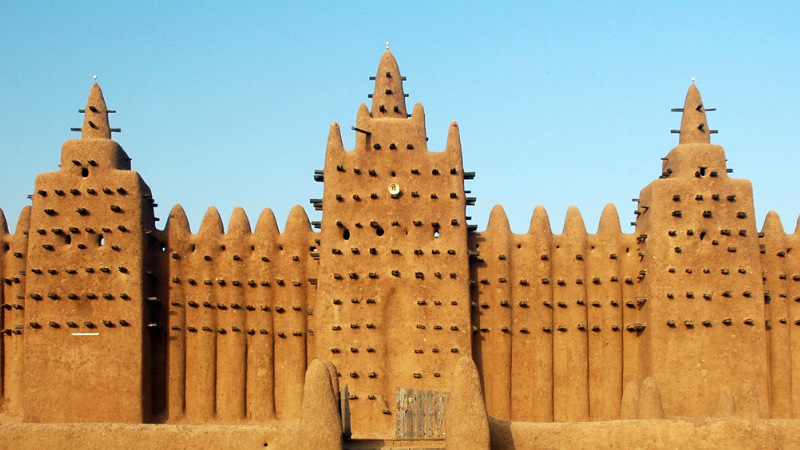
- The capital city of the empire was Niani. Other important cities included Timbuktu, Gao, Djenne, and Walata.
- The Mali Empire controlled important trade routes across the Sahara Desert to Europe and the Middle East.
- The city of Timbuktu was considered a center of education and learning and included the famous Sankore University.
Read also: Ancient Ghana Empire History and Facts
