 The First Encyclopedia Your First Knowledge Home
Architecture in the Renaissance
Learn about Renaissance architecture. What made it different and who were the great architects of the time
Renaissance Architecture :
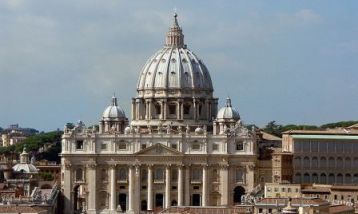 St. Peter’s Basilica is a prime example of Renaissance architecture
(Photo by Wolfgang Stuck)
Filippo Brunelleschi
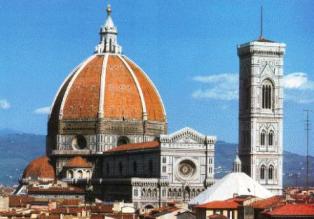 The dome designed by Brunelleschi
(Photo by Enne via Wikimedia Commons)
It would take most of Brunelleschi’s life to finish the full dome, including the lantern on top. The topmost gold ball alone weighed close to two tons. The dome’s construction required more than four million bricks as well. Also, Brunelleschi had to develop fresh techniques for hoisting massive things into the air, which would subsequently be adopted by other architects.
Moreover, San Lorenzo and Santo Spirito cathedrals in Florence were built by Brunelleschi. These churches were constructed with precision and symmetry. In the ensuing years, numerous additional churches would imitate this fundamental style throughout Europe.
Features of Renaissance Buildings
There were some distinctive characteristics of Renaissance architecture that were fairly typical of big construction:
- Square : Numerous structures were constructed in symmetrical square or rectangular designs.
- Front : Buildings typically had symmetrical “façades” that revolved around a vertical axis.
- Columns : Roman-style columns were utilized.
- Arches and Domes : Domes and arches were widely used. This also borrows from ancient Greek and Roman design.
- Ceilings : Building ceilings were typically flat. Ceilings were frequently left open in the Medieval Ages.
Examples of Renaissance Buildings
- Basilica of St. Peter : Maybe the most well-known structure constructed during the Renaissance is this one. The building’s design was created by a number of architects, including Michelangelo. It is regarded by many as the best Christian church structure and boasts the largest interior of any church in the world. From 1506 to 1626, 120 years were needed for completion.
- The Sistine Chapel : This chapel, which is a component of the Pope’s official residence in Vatican City, is famous for its Michelangelo-painted ceilings.
- Palazzo Pitti : This mansion was initially constructed in 1458 for Florence banker Luca Pitti and later joined the Medici family’s vast empire.
- Palazzo Farnese : A High Renaissance palace constructed in Rome for the Farnese family.
- El Escorial : The late 1500s saw construction of this magnificent structure, which served as the Spanish King’s palace. It is arranged in neat, symmetrical squares, as may be seen in the image below. Some people think that Solomon’s Temple’s floor plan was replicated.
- Pazzi Chapel :This church is regarded as a masterpiece of the straightforward style of the time. Despite the fact that the structure wasn’t built until over 20 years after Filippo Brunelleschi’s passing, it is believed that his original design was used.
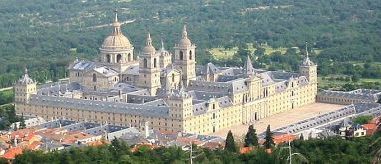 El Escorial from above
Photo from the Madrid Tourist Consortium
Licensed under the Creative Commons 2.0 Generic license
Read also :Art in Renaissance
