 The First Encyclopedia Your First Knowledge Home
Art in Renaissance
Learn about Renaissance art including painting and scupture. What made it unique such as realism and perspective

Art depicted many of the novel viewpoints and attitudes that characterized the Renaissance. Human interests, wants, and capacities were the main emphasis of a novel concept known as humanism. This novel concept altered both the subjects and methods of painting used by artists.
Renaissance art is often divided up into two periods:
Early Renaissance (1400-1479) : In order to learn, artists tried to imitate classical artists, who put a strong emphasis on symmetry and constructing the ideal shape. Artists from this time period include Giotto, Masaccio, and Donatello.
High Renaissance (1475-1525) : The art became even more realistic as perspective and space became more popular. At this time, great artists like Michelangelo, Leonardo da Vinci, and Rafael flourished.
Change of Subjects
During the Middle Ages, Christianity and the Catholic Church were the main subjects of practically all European art. Although Renaissance painters continued to depict religious scenes, they also explored other themes such as Greek and Roman mythology, historical themes, and human portraiture. They also paid attention to the little things in daily life.
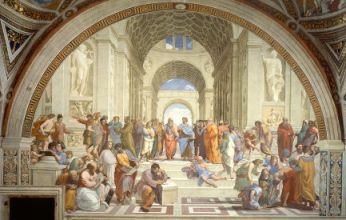 School of Athens by Raphael
featured philosophers such as Plato, Aristotle, and Socrates
Realism
Realistic subject matter in painting and sculpture was one of the major revolutions in art. The use of various approaches to make the subjects and surroundings appear as they would in real life is what is meant by the term “realism.” This also required enhancing the subjects’ emotional characteristics.
New Techniques and Styles
The Renaissance saw the introduction of several novel practices. These methods contributed to the improvement of the art’s quality and realism.
Perspective : Drawing or painting with perspective creates the illusion of three dimensions in a scene. It creates the appearance that some painting elements are farther away than others.
Balance and Proportion : Drawing subjects should be done with consideration for their relative sizes.
Use of Light and Dark : To add drama, perspective, and time to their works of art, several artists began incorporating light and shadows.
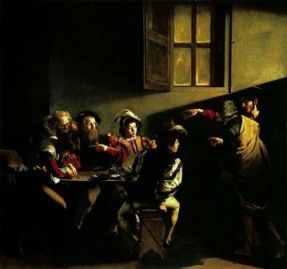
The Calling of Saint Matthew by Caravaggio
Caravaggio used light and shadow to create drama
Sfumato : Leonardo da Vinci employed this method to give his paintings more depth and perspective. It served as a method of blending different subjects together. The Mona Lisa by Leonardo uses this approach.
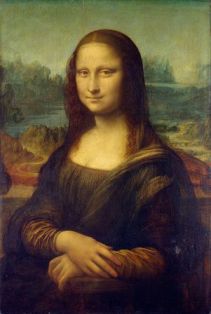 The Mona Lisa by Leonardo da Vinci used the sfumato technique
Foreshortening : Foreshortening is a method of shortening lines to create the appearance of depth, and it is another technique that gave paintings perspective and depth.
Read also : Everyday Life in Renaissance
