 The First Encyclopedia Your First Knowledge Home
Tips to prevent older cats from eating kitten food
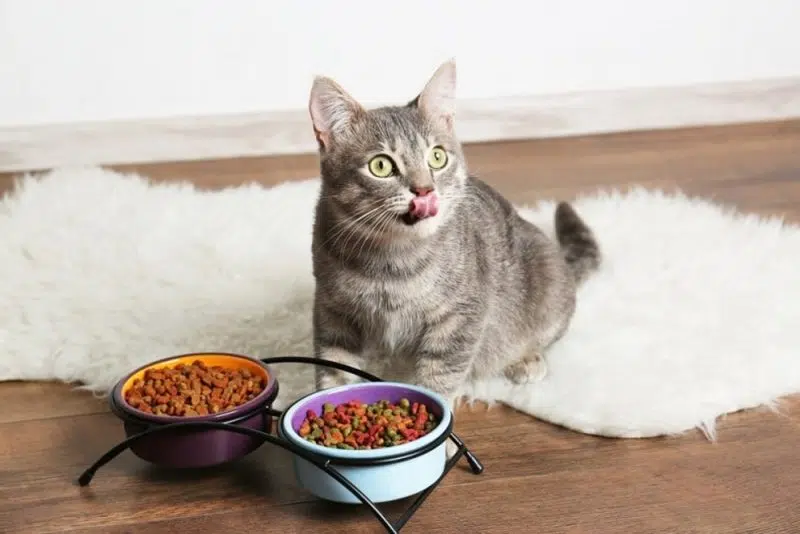
Tips to prevent older cats from eating kitten food
Similar to how an elder sister adjusts to a baby in the house, it’s normal for older cats in your home to behave erratically to a new kitten. Unfortunately, there are occasionally issues with it, such as your elder cat attempting to steal the kitten food that is high in fat and protein. They may be displaying dominance over the new tiny cat in the family, or they may simply enjoy the taste or desire more nutrition.
In any case, when your larger cat would not stop eating the poor kitten’s food, it might become a serious issue. Continue reading to learn how to resolve the issue and assist both cats in establishing a regular feeding schedule.
Tips to prevent older cats from eating kitten food
Top 6 Tips to Stop Older Cats from Eating Kitten Food
1. Understanding Why Your Older Cat Eats Your Kitten’s Food
Older cats have different nutritional requirements than kittens. Broadly speaking, kittens need more nutrient-dense food to fuel their muscles, eyes, and other major organs that are rapidly developing. Mature cats don’t need as many of these essential nutrients and do best on a maintenance diet with similar proportions but lower total amounts of these nutrients. When your older cat eats kitten food, it can throw their body out of balance and cause issues such as obesity, which can lead to secondary issues such as arthritis.
As mentioned above, there are a few major reasons why your adult cat might be scarfing down your new kitten’s food. Let’s highlight each in a quick list right below so you can understand your cat’s motivation better.
Possible Reasons for Stealing Kitten Food:
- Nutritional deficiency: Cats lacking essential nutrients like protein, fat, taurine, or vitamins may be drawn to your kitten’s nutrient-loaded food, and you should consult a vet for more info.
- Dominance: Most common when food is limited, an older cat might display dominance over the new kitten by eating their food and “guarding” essentials, like the litter box.
- Preference: It’s possible your older cat simply discovered the tasty joys of kitten food, and there’s no serious underlying problem.
2. Separate Feeding Areas
The most effective way to solve this problem is to fully separate your older cat from your kitten during feeding times—no access, no problem. This can be done through a few methods, depending on your home’s layout and how far you’re willing to go. Let’s check out some specific ways you can go about this just below.
- Try putting each cat’s food and water bowls on separate ends of the room. You’d be surprised how often that works to solve the problem!
- Use baby gates to fence off separate feeding areas.
- Cut a flap into a box that’s just small enough for your kitten but not your older cat and use it as a feeding station.
- Feed your cats in completely separate rooms. This is pretty radical and won’t solve your problem long-term but works as a short-term fix.
3. Maintain a Strict Feeding Schedule
Over time, it may be worth concocting a feeding schedule where your kitten and older cat eat at completely separate times of the day. This way, your older cat will be full when your kitten eats instead of both kitties being hungry at the same time. Both kitties being hungry at the same time greatly increases the chances of kitten food poaching, so let’s fix that with a more regimented feeding schedule. You should already be feeding your kitten smaller meals more frequently than the older cat, but stagger their mealtimes apart. For example, feed your kitten their meals an hour before or after your older cat. This can take some fine-tuning as you figure out a whole schedule and as your cats acclimate to the new feeding routine, but in the long run, it’s a great way to remedy your issue and promote feline harmony.

4. Try Automatic Microchip Feeders
A more high-tech method to stop food stealing is to invest in microchip pet feeders. These miracles of modern tech only dispense food (dry or wet) when a certain pet’s microchip or RFID collar tag is detected. This way, each pet has their own dispenser with the appropriate type of food. It doesn’t fully prevent your older cat from pushing your kitten out of the way once the food comes out of the feeder, but it certainly cuts down on the chances of that happening.
5. Engage Your Older Cat With Puzzle Feeders
Another possibility is that your older cat is feeling a little unsatisfied with their dining experience. To help engage their mind and keep them mentally occupied during mealtime, you can try using puzzle feeders. There are many different types, from maze-shaped bowls that promote slower eating to mouse-shaped pouches you hide around the house with kibble inside. Try mixing and matching them to keep your cat’s interest and, hopefully, prevent them from stealing the kitten’s food.

6. Consult a Vet
It’s possible that your older cat is suffering from a nutritional deficiency that makes them crave the nutrient-packed kitten food. If their stealing persists, the culprit could be a serious medical condition that needs to be addressed sooner rather than later. We suggest visiting a vet, who can run tests to see if your older cat is deficient in any major nutrients, thus making them crave the kitten food.
A summary
It’s always concerning when your adult cat is constantly trying to steal your kitten’s food, but it’s far from an insurmountable problem. The most accessible ways to do this are to separate your feeding areas or use a microchip feeder, but many other solutions also exist.
Read also: Reasons why cats scratch their ears
