 The First Encyclopedia Your First Knowledge Home
What is Megafire?
What is Megafire? :Learn about Megafires were formerly a rare event, but as a result of climate change, they are now happening more frequently all over the planet.
History
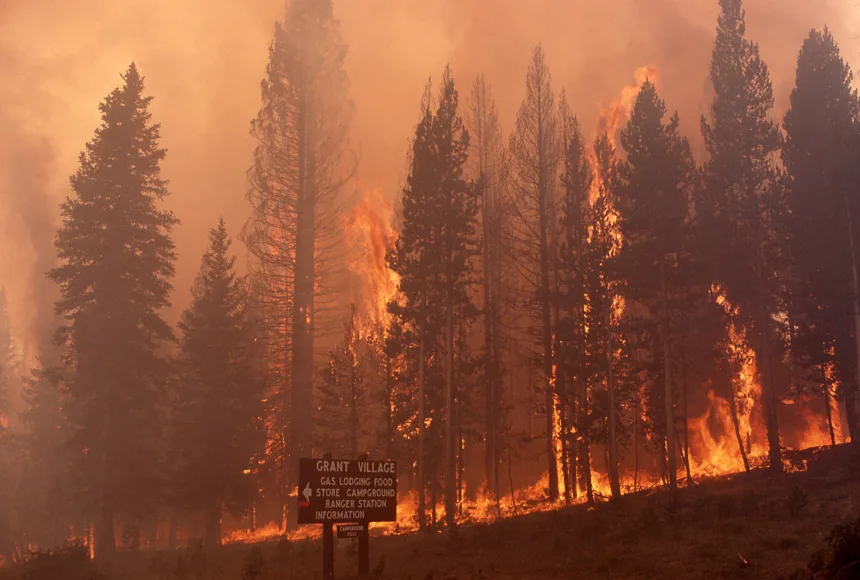
“Black Saturday” refers to the August 1988 incident in Yellowstone National Park when strong winds caused small, smoldering wildfires to erupt into huge firestorms. Wildfire specialists now refer to the destruction of Yellowstone, which is located in the western United States, as a “megafire.” 0.5 million hectares (1.2 million acres), or approximately 36% of the park, were burned when the smoke eventually lifted.
The Yellowstone fire brought a rising trend of large flames consuming forests in the West and other regions of the world to the attention of the country. According to the United States Interagency Fire Center, a megafire is a wildfire that consumes more than 40,500 hectares (100,000 acres) of land. Other wildfire specialists define megafires as wildfires that have an unusually large impact on people and the environment in addition to “acres burned.”
Once Rare, Now Common
Megafires were originally uncommon, but they are now more frequent. In the United States, wildfires now devour an average of 1,000 more acres of forested area annually than they did 40 years ago. Climate change is one of the primary factors, according to scientists, behind the rise in megafires. In the West, snowmelt occurs earlier in the year than it used to due to the warmer, dryer weather. As a result, the dry season—when woods are most at risk of fire—lasts longer.
Putting out fires only makes them worse.
Over the last century, well-intended but unsuccessful land management programs have also added to the issue. The U.S. Forest Service had a rigid policy of putting out all wildfires until recently. People were unaware that some forests have evolved to be flammable. These forests are really kept healthy by sporadic, quick fires that remove overgrowth and promote the germination of new plants.
Dead wood accumulated on the forest floors throughout the 20th century as forest rangers attempted to put out every fire, acting as a bonfire’s foundation. Now, a wildfire that starts in one of these previously unburned regions is more likely to grow larger and hotter as it burns, maybe developing into a megafire.
Megafires have the capacity to permanently alter the terrain, unlike regular wildfires. Studies of the region in New Mexico affected by the 2011 Las Conchas megafire, for instance, revealed that some areas had been transformed permanently into grassland or other nonforested ecosystems.
Can Anything Stop Megafires?
In several U.S. states, notably Florida, as well as in Australia, so-called “controlled burns”—fires set on purpose to burn out the dead and decaying stuff on the forest floor without damaging the healthy, living plants—have reduced the devastation caused by wildfires. However, the U.S. Forest Service already devotes a significant percentage of its money to combating megafires, which are occurring more frequently every year.
In an ironic feedback loop, megafires not only contribute to climate change by spewing greenhouse gases into the atmosphere, but they also fuel it. Megafires may thus grow more frequent in the next decades.
What is Megafire?
Read also : Discover the Galápagos Islands
