 The First Encyclopedia Your First Knowledge Home
Vikings: History and Facts
During the Middle Ages, there was a group of people in Northern Europe known as Vikings. The Scandinavian regions that are now the nations of Denmark, Sweden, and Norway were first inhabited by them. In the Middle Ages, the Vikings were a significant force in Northern Europe, particularly from 800 to 1066 CE, when they were known as the Viking Age.

Vikings: History and Facts
Viking Raids
In Old Norse, the word “viking” actually meant “to raid”. When the Vikings decided to raid villages along Europe’s northern shore, including islands like Great Britain, they would board their long ships and sail across the waters. In 787 CE, they arrived in England and began to plunder settlements. When the Vikings raided, they were known to target helpless monasteries. Although this earned them a reputation as barbarians, monasteries were seen by the Vikings as easy targets because they were affluent and undefended.
The Viking Age and Expansion into Europe
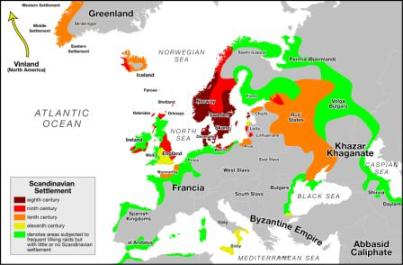
The Vikings eventually started to establish themselves outside of Scandinavia. They colonized parts of Germany, Iceland, and Great Britain in the ninth century. They expanded into Russia and northeastern Europe in the tenth century. Furthermore, they made their home along the northern French shore, founding Normandy—a term meaning “northmen”—there.
The Vikings had reached the pinnacle of their conquest by the beginning of the eleventh century. Leif Eriksson, son of Erik the Red, was one of the Vikings who succeeded in reaching North America. He established a temporary settlement in modern-day Canada. This occurred several hundred years before Columbus.
Defeat in Great Britain and the End of the Viking Age
The English and King Harold Godwinson overcame the Vikings in 1066, under the leadership of King Harald Hardrada of Norway. The Viking Age’s demise is occasionally represented by the battle’s defeat. At this point, the Vikings ceased enlarging their domain and the frequency of their raids decreased.
The arrival of Christianity was a significant factor in the end of the Viking Age. The Vikings were more incorporated into mainland Europe as a result of Scandinavia’s conversion to Christianity and subsequent integration into Christian Europe. The borders and identities of the three nations—Norway, Denmark, and Sweden—also started to take shape.
Viking Ships
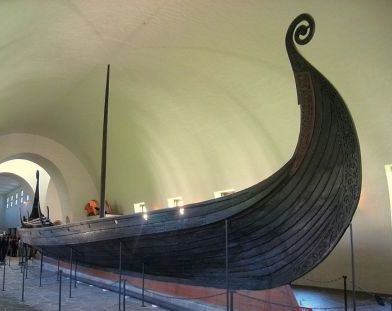
The Vikings were most known, perhaps, for their ships. Longships were built by the Vikings for raiding and exploration. Longships were narrow, long vessels made to move quickly. Although they were initially driven by oars, they eventually added a sail to aid in stormy circumstances. Longships were useful for landing on beaches since they could float in shallow water due to their short draft.
For trade, the Vikings also built freight ships known as knarr. The knarr could carry more goods than the longship because it was deeper and wider.
Five salvaged Viking ships are on display at the Viking Ship Museum in Roskilde, Denmark. Also visible is the way the Vikings constructed their ships. The Vikings built their ships using a technique known as clinker construction. They made use of long wooden planks that overlapped at the edges.
Facts about Vikings
- Although Vikings are often depicted as wearing horned helmets, it is doubtful that they actually wore them into battle.
- The Viking is the mascot for the National Football League team in Minnesota.
- Some Vikings used huge 2-handed axes in battle. They could easily cut through a metal helmet or shield.
- Dublin, Ireland was founded by Viking raiders.
- Some Byzantine Emperors used Vikings for their personal guards.
- The world’s oldest parliament was established by the Vikings in Iceland.
Read also: Kievan Rus: History and Facts
