 The First Encyclopedia Your First Knowledge Home
Trade Routes in Ancient Africa
The economies of numerous African empires greatly benefited from the trade routes of ancient Africa. Trade routes sent goods from Western and Central Africa to distant locations such as Europe, the Middle East, and India.

Trade Routes in Ancient Africa
What did they trade?
Salt and gold were the primary goods exchanged. West African empires like Ghana and Mali benefited greatly from the wealth that their gold mines produced. Beads, metal goods, fabric, ivory, kola nuts, and slaves were among the other goods that were frequently traded.
Major Trade Cities
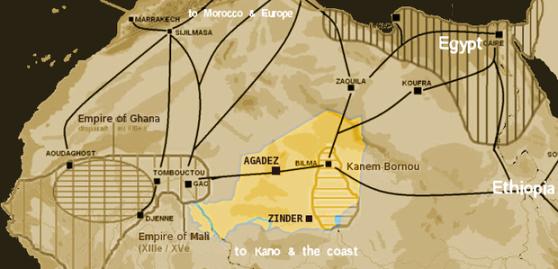
Big cities were hubs for trade as it expanded throughout Africa. Major trading hubs in Western Africa were Agadez, Djenne, Timbuktu, Sijilmasas, and Gao. North African coasts saw the development of seaport cities like Tunis, Cairo, and Marrakesh. Adulis, a Red Sea port city, was a significant hub for trade.
Routes Across the Sahara Desert
Between Western and Central Africa and the port trade towns along the Mediterranean Sea, the main commercial routes traversed the Sahara Desert. From Timbuktu to Sijilmasa, a major commercial route crossed the Sahara. After the commodities arrived at Sijilmasa, they might be transported to a number of locations, such as the port cities of Tunis or Marrakech. Additional commercial routes connected Cairo to Agadez and Gao to Tunis.
Caravans
Caravans are the big groups in which traders transport their products across the Sahara. The primary means of transportation were camels, which could transport both passengers and goods. Slaves occasionally transported cargo as well. Big caravans were crucial because they provided defense against robbers. Approximately 1,000 camels would be seen in a regular caravan; some caravans may contain as many as 10,000 camels.
The Camel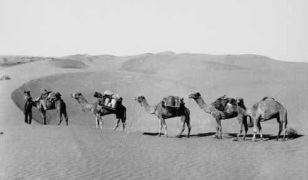
The caravan’s most valuable component was the camel. Trade over the Sahara would have been nearly impossible without the camel. Camels are specially made to withstand extended periods of time without water. They are also capable of withstanding significant variations in body temperature, which enables them to endure the desert’s daytime heat and nighttime cold.
History
Around 300 CE, the Berbers of North Africa tamed camels for the first time. Trade routes across the Sahara Desert were established between settlements through the use of camels. However, African trade peaked once the Arabs took control of North Africa. Islamic traders came to the area and started dealing in slaves from Western Africa and gold. Up until the 1500s, trade routes continued to play a significant role in the African economy during the Middle Ages.
Facts about the Trade Routes of Ancient Africa
- Before a trip across the desert, camels would be fattened up to prepare for the journey.
- The religion of Islam was spread throughout Western Africa through Muslim traders.
- Islam helped to encourage trade because it lowered crime rates through Islamic law and also provided a common language (Arabic).
- Muslim traders who lived in West Africa became known as the Dyula people and were part of the wealthy merchant caste.
- Camels have a double row of eyelashes to protect their eyes from the sand and the sun. They can also close their nostrils to keep out the sand.
- It took the typical caravan around 40 days to cross the Sahara Desert, moving at around 3 miles per hour.
Read also: Sahara of Africa: History and Facts
