 The First Encyclopedia Your First Knowledge Home
The Northern Renaissance History and Facts
learn about The Northern Renaissance History and Facts in countries like France, England, Germany, and the Netherlands.

The Northern Renaissance History and Facts
What was the Northern Renaissance?
Italy served as the hub of the European Renaissance movement. Thoughts and influences from the Italian Renaissance eventually migrated to other parts of Europe. The Renaissance that took place outside of Italy is referred known as the “Northern” Renaissance.
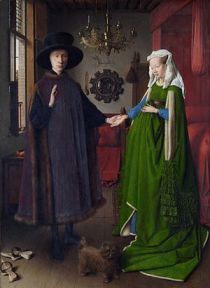 The Arnolfini Portrait by Jan van Eyck
French Renaissance
France was one of the first countries where the Renaissance took hold. This occurred as a result of France’s invasion of Italy in the late 1400s, during which time it was exposed to Italian artworks and aesthetic principles. Leonardo da Vinci was among the Italian painters who were encouraged to migrate to France by Francis I, the King of France.
During this time, French architecture also underwent change. Instead of the gloomy fortress castles of the Middle Ages, kings and nobility started to construct beautiful leisure palaces known as chateaux. Numerous chateaux have sizable, beautifully designed gardens with fountains and statues.
Dutch Renaissance
Dutch painters created their distinctive styles throughout the Dutch Renaissance. Naturalism, realism, and complexity were viewed from a new angle by Dutch artists. They also developed new techniques for using oil paint, which enabled them to create paintings that were incredibly precise and detailed. Early notable Dutch painters like Jan van Eyck, Robert Campin, and Gerard David are only a few examples.
The ideology of humanism was influenced by the Dutch as well. The “Prince of Humanists” was the Catholic priest Erasmus. Praise of Folly and Copia: Foundations of the Abundant Style are just two of the significant books he produced.
German Renaissance
With Johannes Gutenberg’s creation of the printing press, Germany had a tremendous impact on the European Renaissance. The printing press made it possible for the new Renaissance concepts to permeate throughout Europe.
Martin Luther, a priest, was a significant Renaissance figure who was also German. When he printed his 95 theses in 1517, he ignited the Protestant Reformation. His arguments denigrated the Catholic Church and led many individuals to reconsider their faith.
Finally, several German artists visited Italy and studied with the Renaissance masters there. Albrecht Durer was the most well-known German painter at the time. His artistic creations were highly regarded all around Europe.
English Renaissance
England was one of the last nations in Europe to experience the Renaissance. The Elizabethan Period saw the height of the English Renaissance. England has peace and prosperity at this time. The Tudor court recruited a large number of foreign artists, and their ideas started to spread throughout England.
The theater was the most significant feature of the English Renaissance. Some of the most enduring plays in human history were penned by well-known playwrights like William Shakespeare and Christopher Marlowe. Permanent theaters were built all across London where a range of plays, including comedies, tragedies, and history plays, were performed.
Age of Exploration
Many of these nations began the Age of Exploration at the same time as the Northern Renaissance. Expeditions that found trade routes to the Americas, the Far East, and around the world were being funded by Spain and Portugal.
Facts about the Northern Renaissance
- The hub of the German Renaissance was the city of Nuremberg in southern Germany.
- Some of the first Western artists to focus on landscapes were Dutch artists.
- During the Renaissance, the Portuguese created the caravel. This nimble sailing vessel promoted exploration, trade, and travel.
- The composer Josquin des Prez, a French-Dutchman, is frequently regarded as the first musical genius in history.
- French for “rebirth,” the word “renaissance” signifies this.
Read also : The Reformation in the Renaissance
