 The First Encyclopedia Your First Knowledge Home
The History of Islam in Ancient Africa
Islam has a significant influence on North African culture. It had an impact on people’s trade, governance, and educational systems.

The History of Islam in Ancient Africa
Muslim Conquest
Early in the sixth century CE, the Middle East was the birthplace of Islam. The Arabs started to grow their dominion soon after the prophet Muhammad passed away in 632 CE. 647 CE saw their initial invasion of northern Africa. Once they defeated Libya in exchange for tribute, they withdrew from their conquest of a large portion of the continent.
In 665 CE, the Arabs invaded once more. This time, they effectively took over all of North Africa, stretching from Morocco and Egypt to the Atlantic Ocean. For several years, they fought both the locals, the Berbers, and the forces of the Byzantine Empire. All of northern Africa was securely under Arab rule by the year 709 CE.
Numerous people in northern Africa were converted to Islam as a result of Arab domination. Islam has a profound effect on northern African culture. Islam unified the government, the culture, the architecture, and the economy, even though it frequently absorbed certain regional customs and ideals.
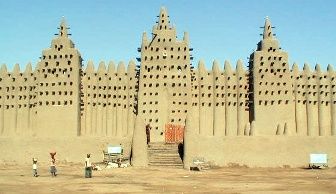
The Maghreb
The Maghreb is the region of northern Africa that was conquered by Muslims. The region extends from the Libyan and Egyptian borders to Mauritania and the Atlantic Ocean. It encompasses the contemporary nations of Algeria, Morocco, Tunisia, Libya, Western Sahara, and Mauritania.
The Berbers are the people who originally inhabited the Maghreb. The languages spoken by the Berbers are similar, and they share a similar ethnic background. The Berbers gradually converted to Islam and adopted many aspects of Muslim culture, despite their initial resistance to the Muslim invasion.
The Moors
The Moors are the people from northern Africa who were conquered by the Arabs after they took over the Maghreb. Throughout the Middle Ages, the Moors ruled over a vast portion of the Mediterranean. At one point, they invaded Europe and took control of much of the Iberian Peninsula (Spain) and the island of Sicily (Italy), in addition to all of northern Africa.
Expansion into Europe
A Moorish army under the command of General Tariq ibn Ziyad conquered Europe in 711. A large portion of the Iberian Peninsula, which includes modern-day Spain and Portugal, was taken over by Tariq and his troops. This territory was ruled by the Moors for hundreds of years until the Christian Reconquista eventually drove them out in 1492.
Central Africa
Moreover, Islam reached the civilizations of Central Africa mostly through cross-Saharan trade. Islam was a significant factor in both the Songhai and the Mali empires. The Emperor Mansa Musa of Mali was arguably the most well-known Muslim in Central Africa. Following his conversion to Islam, Mansa Musa embarked on a fabled pilgrimage to Mecca, located in Saudi Arabia. According to records, he took up to 60,000 companions on his tour.
Facts about Islam in Africa
- Islam is still the dominant religion in north Africa today.
- When under the rule of the Arabs, North Africa was part of a kingdom called the “caliphate”.
- In William Shakespeare’s play Othello, the lead character Othello is a Moor from Italy.
- The oldest Islamic mosque in Africa is the Great Mosque of Kairouan, which was built in 670 CE.
- The Muslims brought with them many technological advancements including mathematics (numerals and algebra), astronomy, medicine, and geography.
- Much like Medieval Europe, northern Africa suffered from the Black Death plague in the 1300s. At least 25% of the population died from this disease.
Read also: The Griots History and Facts
