 The First Encyclopedia Your First Knowledge Home
The Griots: History and Facts

The Griots: History and Facts
What is a Griot?
In ancient Africa, storytellers and performers were known as griots. The majority of villages in the Mande people’s Western African culture had their own griot, who was often a man. The griots played a significant role in the village’s social and cultural life.
Storyteller
The griot’s primary responsibility was to amuse the villagers with tales. They would narrate legendary tales about the local gods and spirits. They would also narrate tales of monarchs and well-known warriors from earlier conflicts. A few of their tales had moral lessons intended to teach the kids about right and wrong behavior as well as how to act in a way that will strengthen their village.
Historian
Ancient African historians were also griots. They would record and commit to memory the village’s history, which included marriages, births, deaths, wars, droughts, and other significant occurrences. After that, the tales and historical occurrences would be transmitted from one generation to the next. The griots’ stories became the history and the only documentation of past events as the village’s history was not written down.
Musician
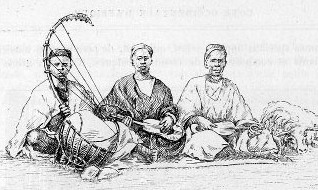
The village’s musician was also the griot. Various instruments were played by distinct griots. The most often used instruments were the ngoni, a tiny lute, the balafon, a wooden instrument like a xylophone, and the kora, a stringed instrument resembling a harp. Griots frequently performed songs or told stories while listening to music.
- Balafon: The balafon is a percussion instrument similar to a xylophone. It is made out of wood and has up to 27 keys. The keys are played with wooden or rubber mallets. The balafon has been around since the 1300s.
- Kora: The kora is a stringed instrument similar to a harp, but with some qualities of a lute. It is traditionally made from a calabash (like a large squash) cut in half and then covered with cow skin. The neck is made from hardwood. The typical kora has 21 strings.
- Ngoni: The ngoni is a stringed instrument similar to a lute. The body is made from hollowed out wood with animal skin stretched across the opening. It has 5 or 6 strings that are plucked with the fingers and thumb when playing.
Modern-day Griots
Africa still has a large population of contemporary griots, particularly in Western African nations like Mali, Senegal, and Guinea. Using traditional compositions, some of today’s most well-known African musicians identify as griots. Today’s griots are mostly itinerant griots. They travel from town to town giving performances at important events like weddings.
Facts about the Griots of Africa
- Most griots were men, but women can also be griots. Women griots usually specialized in singing.
- Another name for griot is “jeli.”
- Although griots were well-respected (and sometimes feared for their magical powers), they were considered a low-ranking caste in the hierarchy of African social life.
- During the Mali Empire, griots of the royal family took on an even more important role. Often the griot of the emperor would serve as counselor and spokesman for the emperor.
- The griots often served as mediators between villages when they had issues and disagreements.
- Some historians believe that the ngoni instrument eventually became the banjo after traveling to America along with West African slaves.
Read also: Daily Life in Ancient Africa
