The 5 Major Biome Types
The 5 Major Biome Types : A wide group of animals and plants that have evolved to a certain environment is known as a biome.
The 5 Major Biome Types
A biome is a sizable region distinguished by its flora, fauna, soil, and climate. Aquatic, grassland, forest, desert, and tundra biomes are the five main types, while some of these can be further broken down into more specialized groups, such as freshwater, marine, savanna, tropical rainforest, temperate rainforest, and taiga.
Freshwater and marine biomes are both included in aquatic biomes. Bodies of water with a salt concentration of less than 1% are referred to as freshwater biomes and include ponds, rivers, and lakes. Nearly 75 percent of the surface of the Earth is covered by marine biomes. The ocean, coral reefs, and estuaries are all examples of marine biomes.
Open areas with a warm, dry environment that are dominated by grass are known as grasslands.
Tropical grasslands (also known as savannas) and temperate grasslands are the two different types of grasslands.
Nearer to the equator, savannas sometimes have a few scatted trees.
They include parts of Australia, India, and South America in addition to roughly half of the African continent.
Further from the equator, temperate grasslands can be found in South Africa, Hungary, Argentina, Uruguay, North America, and Russia.
They get less precipitation than savannas and lack any trees or bushes.
The two types of temperate grasslands are prairies and steppes; prairies are distinguished by having taller grasses while steppes have shorter grasses.
One-third of the Earth is covered in forests, which are primarily made up of trees.
A large portion of the terrestrial biodiversity of the planet, including insects, birds, and mammals, is found in forests.
Temperate forests, tropical forests, and boreal forests are the three main forest biomes (also known as the taiga).
These varying latitudes where these forest kinds are found result in various climatic conditions.
Close to the equator, tropical forests can be found. They are warm and humid.
Higher latitudes are home to temperate forests, which have all four seasons.
Boreal forests are found at even higher latitudes, and they have the coldest, driest climates, with snow making up the majority of precipitation.
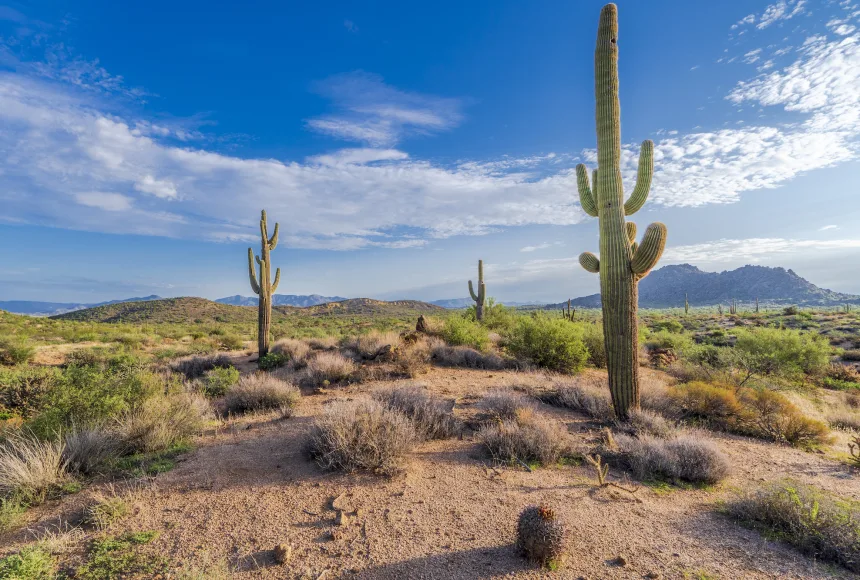
Deserts are dry regions with fewer than 50 cm (20 inches) of annual rainfall. They occupy about 20% of the Earth’s surface. Although the majority of deserts are found in subtropical regions, they can also be cold or hot. Deserts do not have as much biodiversity as other biomes due to their harsh circumstances. Any plants and animals that live in deserts must have unique adaptations to the dry climate. Reptiles and tiny mammals make up the majority of the biodiversity in the desert. According to their geographic location or climatic circumstances, deserts can be divided into four groups: hot and dry, semiarid, coastal, and cold.
With the lowest measured temperatures of any of the five major biomes, a tundra has incredibly hostile circumstances, with yearly average temperatures ranging from -34 to 12 degrees Celsius (-29 to 54 degrees Fahrenheit).
They also experience short summers, poor soil nutrient quality, and little precipitation, only 15 to 25 centimeters (six to ten inches) annually.
Arctic and alpine tundra are the two varieties.
The vegetation of the tundra, which consists of shrubs, grasses, mosses, and lichens, is not very diverse.
Permafrost, a frozen layer beneath the soil’s surface, is partly to blame for this. Alpine tundra is found on mountains when the height is too high for trees to survive, and the arctic tundra is found to the north of boreal woods. Any creature that lives in the tundra must be able to adapt to its harsh environment in order to survive.
 The First Encyclopedia Your First Knowledge Home
