 The First Encyclopedia Your First Knowledge Home
Terms related to Ancient Rome civilization
Terms related to Ancient Rome civilization
Aqueduct: A manmade channel used for delivering water to Roman towns. Public fountains and baths make water available to everyone. Wealthy Romans had running water in their homes.
Barbarian: a term used by the Romans to refer to people who lived outside the Roman Empire.
Censor: A government official who counted the people of Rome. He was also responsible for public morality and some of the government’s finances.
Century: A division of the Roman army made up of 80 soldiers and led by a centurion.
Circus: A large oval-shaped stadium used for chariot races.
Citizen: A Roman citizen had certain rights and privileges, including the right to vote. Only freeborn men were fully Roman citizens.
Cohort: A cohort was a division of the Roman army. It was made up of six centuries, or 480 men. There were 10 cohorts in a Roman legion.
Consul: the highest position in the Roman government. There were two consuls elected each year for a one-year term.
Dictator: a ruler who has absolute power.
Dynasty: When a family passes down the leadership of a country from generation to generation,.
Emperor: The leader of an empire. The first emperor of Rome was Augustus.
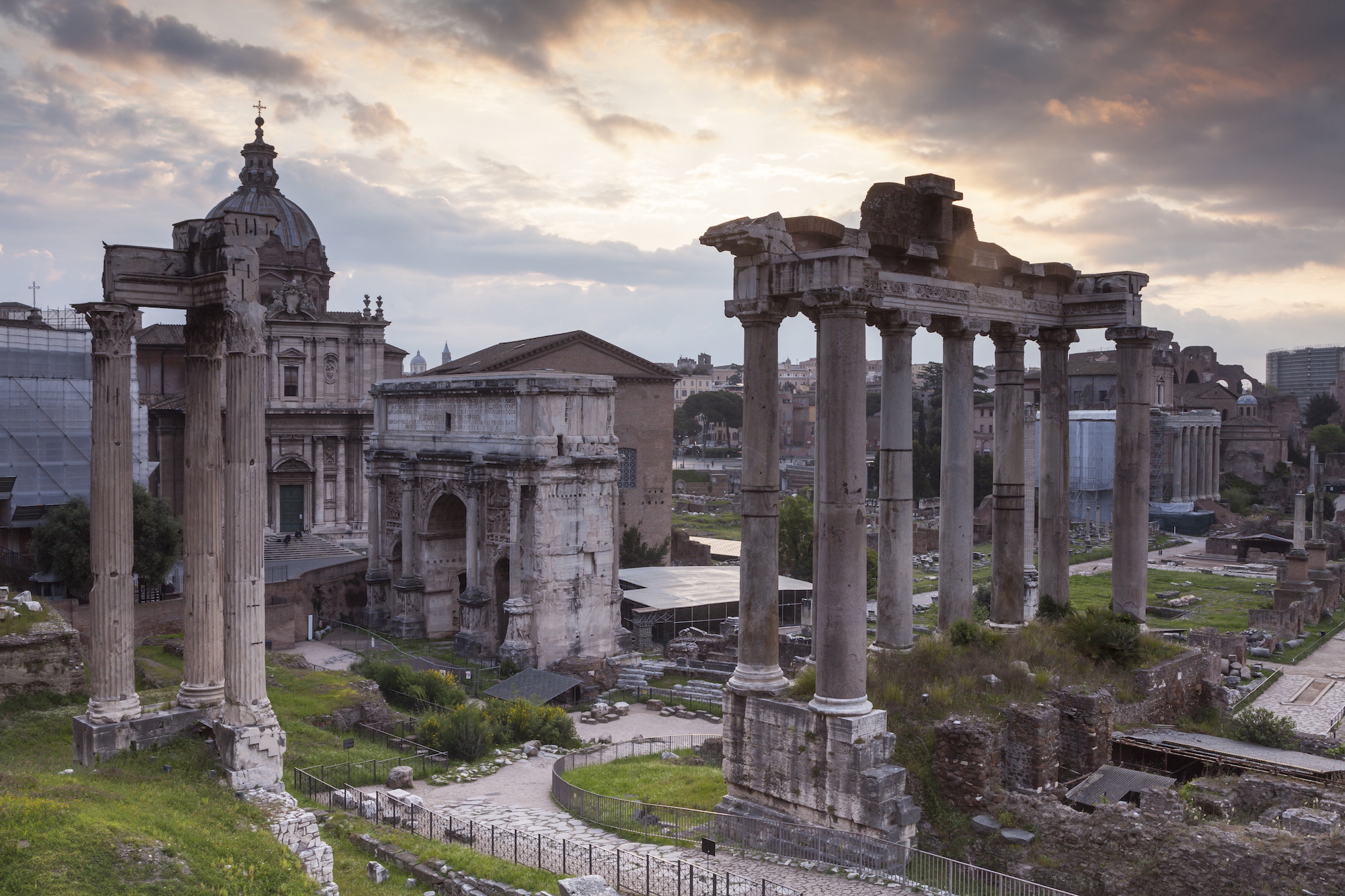
Forum: the area of a Roman town that was the center of Roman life. Government meetings, public speeches, and business all took place in the forum.
Fresco: a painting made on a freshly plastered wall. The paint would be absorbed into the plaster as it dried.
Gaul is what the Romans called the lands to the north and west of Italy.
Gladiator: A person who fought for the entertainment of Roman audiences. Gladiators sometimes fought to the death.
Gladius: A short sword used by Roman soldiers.
Legion: The main unit of the Roman army. It generally had around 5400 soldiers and was divided up into groups of men called cohorts and centuries.
Mosaic: A type of art using small tiles made of glass or stone to create a picture.
Orator: a talented public speaker. This was an important skill for Roman leaders.
Paterfamilias: The man who was the leader of the Roman family. He had complete power over his wife and children.
Patrician was a member of the original elite land-owning families of Rome.
Plebeian: A common person or person not of the patrician class.
Praetor: a high-ranking official in the Roman government.
Province: an area of the Roman Empire that was outside Italy.
Quaestor: An official of the Roman government who supervised various financial affairs.
Republic: A country where the government is run by elected officials rather than by a king or emperor.
Rhetoric is the art of public speaking used to inform, motivate, or persuade an audience.
Senate: A group of prestigious men who advised the consuls. In most cases, the consuls did what the Senate recommended.
Tribune: An elected representative of the Plebeian Council. Tribunes could veto laws made by the Senate.
Toga: A long robe worn by Roman citizens. It was generally white, with color markings for high-ranking officials.
Read also: The army of Ancient Rome
