 The First Encyclopedia Your First Knowledge Home
Roman baths History and facts
People would go to the public baths in every Roman city to take a bath and mingle. The public bath served as a sort of community hub where people socialized, worked out, and relaxed.
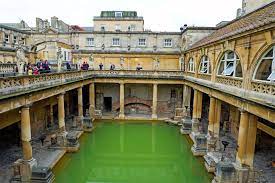
Roman baths History and facts
Getting Clean
The Romans used the baths primarily as a means of personal hygiene. For daily hygiene, the majority of Romans residing in the city made an effort to visit the baths. They would apply oil to their skin and use a strigil, a metal scraper, to remove it in order to get clean.
Socializing
The baths served as a gathering spot for people. At the baths, friends would get together to chat and eat. Men would occasionally meet for business or talk politics.
Did you have to pay to get in?
The public baths required payment in order to enter. Even the impoverished could afford to go because the cost was usually rather low. A politician or an emperor would occasionally pay for the people to attend the baths, making them free for everyone.
A Typical Roman Bath
A typical Roman bath can include several rooms and be rather spacious.
- Apodyterium: This room was the changing room where visitors would take off their clothing before entering the main area of the baths.
- Tepidarium: This room was a warm bath. It was often the main central hall in the bath where the bathers met and talked.
- Caldarium: This was a hot and steamy room with a very hot bath.
- Frigidarium: This room had a cold bath to cool the bathers at the end of a hot day.
- Palaestra: The palaestra was a gymnasium where bathers could exercise. They might lift weights, throw a discus, or play ball games.
Some baths featured many hot and cold settings since they were so large. They may also have a reading area, a garden, a food service, and a library.
Private Baths
Rich folks occasionally had private bathrooms inside of their houses. Given that they had to reimburse the government for the quantity of water they consumed, these might get very costly. Even if a wealthy individual owned a bath, they probably still went to the public baths to mingle and socialize.
How did they get water to the baths?
To transport fresh water from rivers or lakes to the city, the Romans constructed aqueducts. To ensure that there was enough water for the city and the baths, Roman engineers continuously checked the water levels and aqueducts. They even had sewage systems and subterranean pipes. Those with money might afford to have running water in their houses.
Facts About Ancient Roman Baths
- Men and women bathed at different times or in different areas of the baths.
- One of the most famous Roman baths was in Bath, England. The baths were built on hot springs that were said to have healing powers.
- The floors of the baths were heated by a Roman system called a hypocaust that circulated hot air under the floors.
- Items were often stolen in the baths by pickpockets and thieves.
- Larger cities would have several public baths.
- The Baths of Diocletian were the largest baths in Rome. Built in 306 AD, the baths could hold 3000 people and covered an area of over 30 acres.
Read also: The Colosseum History and Facts
