 The First Encyclopedia Your First Knowledge Home
Robert Smalls Biography
Learn about the biography of Robert Smalls, an enslaved person who made a daring escape to the North, became a Civil War hero, and later a U.S. Congressman

Biography of Robert Smalls
Robert Smalls was an American war hero and politician who, during the American Civil War, commandeered a Confederate ship to flee the South and later became the first Black captain of a vessel in U.S. service. Robert Smalls was born in Beaufort, South Carolina, on April 5, 1839, and died there on February 23, 1915. He represented South Carolina in Congress for many years (1875–79, 1882–83, and 1884–87) during the Reconstruction era.
Biography :
Robert Smalls led a remarkable life marked by adversity, bravery, and success. He was raised in poverty in South Carolina, where he was born into slavery, yet he finally rose to the position of ship’s pilot. Robert devised a scheme to seize a Confederate ship during the Civil War, risking his life to help his family flee to freedom. He afterwards enlisted in the Union Army and fought for the other members of his people’s independence. Robert returned to South Carolina following the Civil War, where he was elected to the House of Representatives.
Born Enslaved
On April 5, 1839, Robert Smalls was born in Beaufort, South Carolina. Henry McKee held his mother, Lydia Polite, as a slave. Robert was raised performing enslaved labor for the McKee family. He shared a modest hut with his mother behind the enormous McKee home. When he was younger, Robert spent his time taking care of his master Henry McKee. Robert’s mother made sure that McKee knew the truth about slavery, despite the fact that McKee liked Robert and treated him well. Robert may still be sold at any point, regardless of how he was treated. He was regarded as Henry McKee’s property.
Becoming a Boat Pilot
Robert’s master started hiring him out as he got older. Robert would perform tasks around the Beaufort area, and his owner would receive payment. He loved the water and finally found a job at the Port of Charleston working on the docks and ships. Robert was intelligent and diligent. He gradually mastered the navigation of Charleston Harbor and the nearby rivers and shoreline. He acquired the right to be the boat’s wheelman. The duties of this position were practically identical to those of a boat pilot, although enslaved people were not permitted to use the term “pilot.” That was a significant position with some prestige.
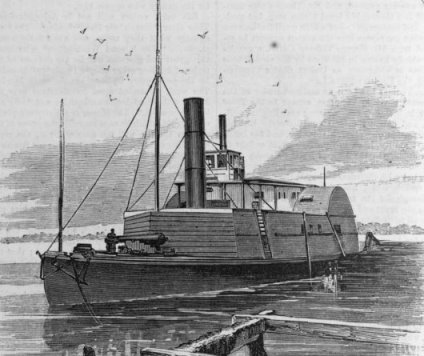 The gun-boat “Planter”
Source: Harper’s Weekly
Robert fell in love when he was seventeen years old in 1856. He wed Hannah Jones, a slave who was employed as a maid at a Charleston hotel. When they got married, Hannah already had two daughters, but the couple soon welcomed a third child. Robert had created a decent life for himself. Although he loved his family and had a decent profession, he was aware that life was short. His family was held captive. His children may be sold at any time and transported abroad because they were the property of other people. Robert started preparing his getaway.
The Civil War Begins
The Battle of Fort Sumter, which took place in April 1861 not far from Robert and his family’s Charleston home, marked the start of the American Civil War. The Confederate Army sent Robert to the military transport ship Planter since he was an accomplished pilot. Smalls rapidly earned the trust of the white ship’s officers and was elevated to the position of wheelman. In the area of Charleston, he skillfully navigated the ship while laying mines, moving ammunition, and delivering Rebel troops and dispatches.
Robert Smalls Biography : Escape
Planning the Escape
Robert learned of the tens of thousands of slaves who joined the Union Army in their quest for freedom as the conflict intensified. The Union blockade was visible from Charleston Harbor’s outside. He was aware that his family would be set free if he could bring them to the Union. There were also some slaves among the crew members of the Planter. Robert came up with a scheme in which he would escape using the Planter. He started to keep an eye out for the best opportunity to move.
A Daring Escape
The ideal window for escaping was the early hours of May 13, 1862. Recently, the ship had been armed with a number of powerful cannons and ammo. Together with the Planter itself, the armaments would be an invaluable asset to the Union. In addition, the white officers spent the night on land, putting Robert and the other enslaved crew members in charge of the ship. Just to the north of where the Planter was docked, Robert’s family as well as family members of the crew had earlier gotten on a ship. Just as Smalls had intended, everything was in its proper position.
Robert and the crew launched the ship at three in the morning. Robert put on the captain’s uniform in order to get through the checkpoints. He donned a straw hat that the captain frequently wore to disguise his face. He even mimicked the captain’s motions and body language. The rest of the crew members concealed as they neared the first checkpoint. Robert signaled appropriately and started to pass the checkpoint. He would be shot and his family would be punished if his plan didn’t work.
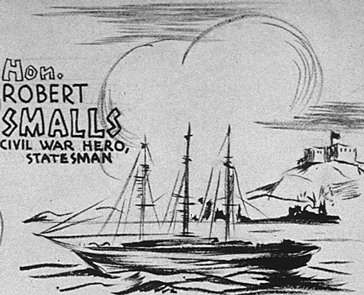 The Planter
Author: Charles Henry Alston
After navigating the obstacle, the Truck picked up the family members. It then departed the harbor and sailed toward the Union Blockade. The ship began to approach the blockade after evading the heavy weapons of Fort Sumter. Robert substituted a white flag for the Confederate one and hoped the Union would notice it before opening fire on the ship. Thankfully, the Onward, a Union ship, recognized the white flag and sailed up to the Planter without opening fire. All of the slaves on board, including Robert Smalls and his family, were now free.
Joining the Union
As a result of the heroic escape of Smalls, which was reported in Union newspapers, Smalls and his crewmen became heroes across the Union. They received prize money for bringing the ship and ammunition to the Union in addition to being set free. Smalls then enlisted in the Union army to aid in the struggle against slavery and the Confederacy.
Smalls participated in about seventeen combat operations throughout the war. He was the captain of a number of vessels, notably the ironclad Keokuk and the Planter. Smalls also promoted the rights of African Americans in the North by using his reputation. He played a part in Philadelphia’s integration of public transportation and in persuading Abraham Lincoln to allow black men to serve in the Union military.
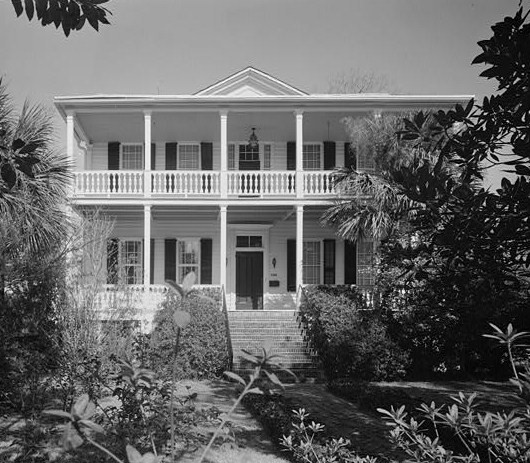 The Robert Smalls House
Source: Historic American Buildings Survey
After the War
Robert Smalls went back to his native Beaufort, South Carolina, after the Civil War. Robert was able to purchase his old masters’ home with the help of his military retirement and the reward money he obtained for turning over the Planter to the Union. Throughout the first few months, Robert focused on learning to read and write. Afterwards he started a number of companies, including a store, a newspaper called the Southern Standard, and a school for black kids.
Robert Smalls Biography : politician and other facts
Politician
Smalls aspired to use his fame and money to better the lives of South Carolina’s former slaves. He became active in state and municipal politics and joined the anti-slavery Republican Party. Robert entered the field of national politics in 1874 after being chosen to serve in the House of Representatives of the United States. Smalls fought for the rights of African American South Carolinians during his five terms in Congress.
Later Life and Death
In 1883, Robert’s wife Hannah passed away. In 1890, Robert would remarry and have a further child. He passed away on February 23, 1915, from malaria and diabetes.
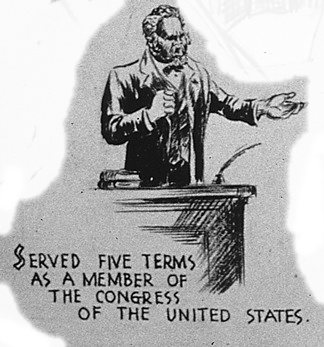
Robert Smalls became a Congressman
Author: Charles Henry Alston
Facts about Robert Smalls
- Once he declared, “My race does not require a special defense because their historical record in this nation shows that they are on par with any other people anywhere. All they require is a fair shot in the struggle of life.”
- Robert offered to buy his wife and daughter from their owner before fleeing. Yet the cost was so great that he was certain he would never be able to save enough money to purchase their freedom.
- Together with the ship, cannons, and ammunition, the Planter also had the captain’s codebook, which gave the Union access to priceless Confederate Naval secrets.
- The Republican Party of South Carolina was established by him.
- About a week after Smalls’ escape, the Union Army used information he provided to easily seize Coles Island from the Confederacy.
- In exchange for turning the ship over to the Union, Congress gave the Planter crew money. Smalls’ portion was worth $1500, which was a respectable sum at the time.
Read also : Mary Todd Lincoln Biography
