 The First Encyclopedia Your First Knowledge Home
Robert E Lee Biography
Learn about the biography of Robert E Lee Robert E. Lee Biography general for the Confederacy during the Civil War
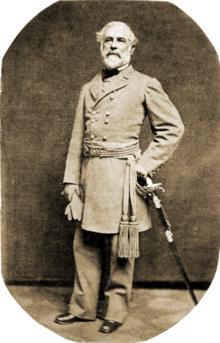
Biography of Robert E Lee
During the American Civil War, Robert Edward Lee (January 19, 1807 – October 12, 1870) served as a Confederate general and, near the war’s end, was given command of the whole Confederate States Army. From 1862 until its capitulation in 1865, he served as the commander of the Army of Northern Virginia, the Confederacy’s most potent army, gaining a reputation as a shrewd tactician.
Where did Robert E Lee grow up?
On January 19, 1807, Robert E. Lee was born in Stratford Hall, Virginia. Henry, his father, was a hero in the American Revolutionary War and was known as “Light Horse Harry.” Ann Carter, his mother, was descended from a rich family.
Despite their heritage, his family was not wealthy. Robert’s father had lost all of the family’s money due to some poor business decisions. His father entered a debtor’s prison when Robert was two years old. His father left for the West Indies a few years later and never came back.
Becoming a Soldier
Robert thought joining the military was a great way to acquire a career and a free education because his family was poor. He enrolled in the West Point Military Academy when he was 18 years old, and he nearly graduated at the top of his class in 1829. After receiving his degree, he enlisted in the Army Corps of Engineers, where he assisted in constructing forts and bridges for the military.
Getting Married
Robert wed Mary Custis in 1831. Mary was the great-granddaughter of Martha Washington and hailed from a distinguished family. Throughout the years, Mary and Robert would produce seven kids—three boys and four girls.
Mexican-American War
During the Mexican-American War, Lee first experienced battle and war. Lee was one of the best soldiers General Winfield Scott had ever seen in battle, according to General Scott, to whom he relayed his findings. Due to his achievements during the war and his reputation as a military leader, Lee was promoted to colonel.
Harpers Ferry
John Brown oversaw the Harpers Ferry raid in 1859. He was trying to incite a slave uprising while opposing slavery in the South. Lee oversaw a squad of marines brought in to put an end to the raid. Lee came, and the marines soon brought John Brown and his men under control. He had established himself once more.
The American Civil War Begins
Lee was given the opportunity to head the Union army by President Lincoln when the Civil War erupted in 1861. Lee, however, believed he could not fight against Virginia, his home state, because he was also loyal to it. He quit the United States Army and was appointed General of the Virginia Confederate Army.
Commander of the Army of Northern Virginia
During the Civil War, Lee assumed command of one of the most significant armies. Many significant battles on the eastern front were fought by the Virginian army. Officers with skill like Thomas “Stonewall” Jackson and Jeb Stuart were chosen by Lee. Lee and his men managed to win several battles despite the fact that the Confederate armies were consistently outnumbered by the Union army because to their cunning and valor.
Lee was given the moniker “The Grey Fox.” He was described as “grey” because he rode a grey horse and wore a grey Confederate army uniform. The reason he was called the “fox” was because of his military leadership abilities.
Civil War Battles where Lee commanded
The Seven Days Fight, the Battle of Antietam, the Battle of Fredericksburg, the Battle of Gettysburg, the Battle of Cold Harbor, and the Battle of Appomattox were just a few of the important Civil War conflicts that Lee oversaw.
Surrender
Lee battled valiantly, but finally he was overwhelmed by Union soldiers due to their sheer size. At the courtroom in Appomattox, Virginia, on April 9, 1865, General Robert E. Lee handed over his forces to General Ulysses S. Grant. He won favorable treatment for his soldiers, who were fed and let to go home.
After the War
Lee was pardoned by President Lincoln despite the fact that he might have been convicted and executed for betraying the United States. At Lexington, Virginia, Lee was appointed president of Washington College. He was employed there until his death in 1870 due to a stroke. After the Civil War, Lee merely desired for the country to experience peace and healing.
Facts About Robert E. Lee
- Some of the first Europeans to settle in Virginia were Lee’s relatives. Also, he was related to two signers of the Declaration of Independence.
- Prior to the Civil War, Robert and his wife Mary resided at Arlington House, her estate. Later on, the Arlington National Cemetery would be built on their property.
- Since he was perceived as having the authority of an elderly woman, Lee earned the moniker “Granny Lee” at the outset of the conflict. Yet, he would soon become well-known for his ability to lead and in the military.
- Traveller, his famous horse, is shown in numerous images and paintings of Robert E. Lee.
- Lee was no longer a citizen of the United States following the war. In 1975, after records were discovered demonstrating that Lee had made an oath to uphold American loyalty, President Gerald Ford restored his citizenship.
Read also : Stonewall Jackson biography
