 The First Encyclopedia Your First Knowledge Home
Mythology in Ancient China
Learn about the mythology in Ancient China including the three sovereign, the five emperors, dragons, and the legend of the Chinese New Year
The Five Emperors and the Three Sovereigns
We learn about the earliest legendary kings of Ancient China via Chinese mythology. These sages and gods held power before the start of the first Chinese dynasty.
The Three Sovereigns were mighty demigods who ruled the land with peace and prosperity while living long lives.
- Fu Xi: Fu Xi is credited with creating writing, fishing, and trapping. He was Nuwa’s brother. The first humans made of clay were created by Fu Xi and Nuwa.
- Nuwa: Fu Xi’s sister was named Nuwa. She also restored the wall of heaven while assisting him in the creation of humans.
- Shennong: “Divine Farmer” is the meaning of Shennong’s name. He taught the Chinese how to do agriculture. He created the Chinese calendar, axe, hoe, irrigation, and the plow.

The Heavenly Sovereign, the Earthly Sovereign, and the Human Sovereign are other titles for the Three Sovereigns.
The Five Emperors were ideal kings who exercised honorable and enlightened leadership. The Yellow Emperor was the most well-known of the Five Emperors. His 100-year reign marked the beginning of Chinese civilization. The Yellow Emperor was accompanied by Zhuanzu, Emperor Ku, Emperor Yao, and Shun.
Chinese Dragon
The legendary dragon is the most powerful being in Chinese mythology. The dragon has four sharp, lethal claws on each of its legs and is a long snake-like creature. While some dragons are show
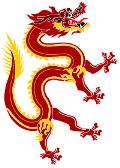
n as having tiny wings, they all possess the magical ability to fly. It was believed that dragons could control the weather and the water. They have influence over the seas, floods, tornadoes, and sto
rms.
The dragon served as the emperor’s emblem. The Dragon Throne was the name given to his throne. When the Yellow Emperor passed away, legend has it that he transformed into a dragon and ascended to heaven.
Legend of the New Year
Many thousands of years ago, in a little village, the Chinese New Year mythology first emerged. A monster by the name of Nian would come the village every winter and attack the villagers. The locals were terrified and unsure of what to do. Then, one year, a sage old man devised a strategy. The next time Nian came, the crowd made a lot of noise with pyrotechnics and drums. The creature was scared away by these noises and retreated towards the hills.
The day they managed to escape from the monster was celebrated by the villagers. They would let off fireworks every year to mark their success. The Chinese New Year and the Spring Festival both began on this day.
Facts about Mythology in Ancient China
- Only the emperor could wear clothes that had pictures of the dragon.
- Nian was said to have the body of a bull and the head of a lion.
- Sometimes the Yellow Emperor was considered one of the Three Sovereigns.
- The Three Sovereigns are also known as the Three August Ones.
- Some records show that the Three Sovereigns each ruled for over 10,000 years.
- It was the Yellow Emperor’s wife, Leizu, who taught the Chinese how to make silk from silkworms.
- Emperor Yao was said to have been morally perfect and served as the example of how all future Chinese emperors should behave.
Read also: Religion in Ancient China
