 The First Encyclopedia Your First Knowledge Home
Ming Dynasty History and Facts
Learn about Ming Dynasty History and Facts of Ancient China. The Emperors and accomplishments.
Ming Dynasty History and Facts
Overview
Many people refer to the Ming Dynasty as the final of the major Chinese dynasties. From 1368 to 1644, it was in charge of Ancient China. The Qing Dynasty followed it in power.
How did it start?
China had been ruled by the Yuan Dynasty before the Ming Dynasty. The Mongols, who had conquered China nearly 100 years previously, established the Yuan Dynasty. The Mongols were disliked and viewed as enemies by many Chinese. A peasant revolt ultimately succeeded in ousting the Mongols from China and forcing them to flee.

Zhu Yuanzhang was in charge of the peasant uprising that overthrew the Yuan Dynasty and the Mongols. Emperor Hongwu was his new title after seizing power in China. The Ming Dynasty had just started when this occurred.
Great Projects
Large civil engineering projects were undertaken during this time, such as:
China’s Great Wall – During the Ming Dynasty, the Great Wall was almost entirely rebuilt. The Ming constructed the lofty, broad brick walls that are still in place today.
Grand Canal: During this time, the Grand Canal was restored. Trade was significantly impacted by this, which boosted the economy.
The Forbidden City, which lay inside Beijing’s capital city, housed the emperor’s palace. Over 185 acres of land were covered by nearly 1000 structures.
Culture and Arts
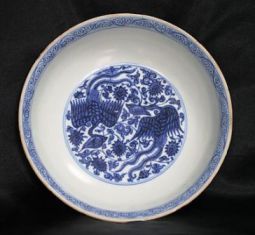
During the Ming Dynasty, art flourished. Literature, art, music, poetry, and porcelain were all included. At the time, blue and white porcelain Ming vases were highly appreciated all over the world. They are still regarded as being quite valuable.
This period also saw unprecedented heights in literature. The Ming Dynasty saw the composition of three of the Four Great Classical Novels of Chinese Literature. The three of them are Journey to the West, Romance of the Three Kingdoms, and Outlaws of the Marsh.
Government
A group known as the civil service was in charge of running the government. Candidates had to pass challenging exams in order to be hired by the civil service. The top jobs would go to the males who scored the highest. Some men would devote years to their studies in an effort to ace the tests and land one of these coveted posts. Exams frequently covered a variety of topics, but a large component of the assessment focused on Confucius’s philosophical ideas.
Emperor Chengzu
The third ruler of the Ming dynasty was called Emperor Chengzu. He strengthened China in many ways, including by rebuilding the Grand Canal and forging diplomatic and trade ties with foreign nations. He also constructed the Forbidden City and moved the nation’s capital to Beijing. Later, he was referred to as the Yongle Emperor.
Zheng He
Zheng He excelled as a Chinese adventurer. Emperor Chengzu gave him the order to leave, and he traveled the world with the Chinese navy. He traveled to Africa as well as the Middle East and Southeast Asia. He returned from an African country called Somalia with a giraffe for the Emperor.
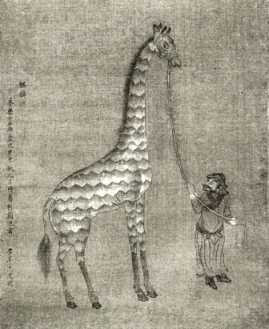
Tribute giraffe from Bengala by Shen Du
Facts about the Ming Dynasty
- The Forbidden City took 15 years and over 1 million workers to complete.
- Folding fans became very popular. They were brought over from Japan and Korea.
- Portuguese traders first arrived in China in 1517.
- People could only enter the Forbidden City if they had permission from the Emperor.
- Yingzong became emperor when he was just 8 years old. He was later captured by the Mongols. When he was released he found his brother was emperor. He would later regain his rule.
- When Emperor Hongwu became worried about losing his throne, he established a secret police called the Jinyi Wei to spy on people.
Read also:Yuan Dynasty History and Facts
