 The First Encyclopedia Your First Knowledge Home
Medieval A Knight’s Coat of Arms
During the Middle Ages, coats of arms were common among knights and aristocrats. This was a unique emblem that stood for their family. Having a unique emblem or coat of arms is commonly referred to as “heraldry.”

Medieval A Knight’s Coat of Arms
How did having a coat of arms get started?
One way to identify a knight from another was to utilize their initial coat of arms. Even a knight’s companions would be unable to identify him when he was fully armored, with his helmet and plate mail. Knights started painting insignia on their shields as a result. Eventually, they started to emblazon the sign on both their coat, which they wore over their armor, and their flag. That’s how the term “coat of arms” came to be.
The Herald
Every coat of arms had to be distinct. But there were so many knights that it was difficult to determine which person held which emblem. Eventually, keeping track of the various coats of arms fell into the hands of people known as heralds. They ensured that newly created coats of arms were distinct. They also maintained a record of the owners of each coat of arms.
Laws
The strict rules governing the application process for a new coat of arms evolved over time. Every new coat of arms requires official registration. The family of the knight had a coat of arms. His oldest son would inherit the coat of arms from him.
Designing a Coat of Arms
The designs on the initial coats of arms were somewhat basic. The designs for coats of arms became more intricate as they proliferated in order to ensure that each one was distinct. But every coat of arms has some components.
- Escutcheon: The escutcheon is the main shape of the coat of arms. It was in the shape of a shield, but the exact shape could vary (see picture below).
- Field: The field was the background color. At first, the field was a solid color, but later patterns began to be used for the field.
- Charge: The charge is the main picture in the center of the coat of arms. It was usually an animal, but it could be other things, such as a sword or a ship.
- Ordinaries: Ordinaries were designs that appeared on the field. They added additional color and uniqueness to the coat of arms.
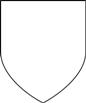


Different shapes used for the escutcheon or shield
What did the color mean?
Meanings for various background colors evolved over time. Nobles and warriors wore red clothing. Green symbolizes optimism and joy, black represents piety and knowledge, and blue represents truth and sincerity. In heraldry, the colors are referred to as tinctures.
What did the different charges mean?
Additionally, the charges that served as the coat of arms’ central motif had many connotations. For instance, the sun represented power and grandeur, the lion represented majesty and strength, the elephant represented wit and ambition, and the boar represented daring and fury.
Facts about a Knight’s Coat of Arms
- Old French was used to describe the colors of the background. For example, gules (red), azure (blue), sable (black), and vert (green).
- The coat of arms of English King Richard I has a red background and three lions. It is often referred to as the “arms of England”.
- The designs of backgrounds have names such as bendy (diagonal stripes) and lozenge (a diamond checked pattern).
- An “achievement” in heraldry includes the shield plus other elements such as a motto, crest, supporters, helm, and coronet.
- English heraldry has seven colors (tinctures) including two metals (gold, silver) and five colors (blue, red, purple, black, green).
Read also: Medieval Knight’s Armor and Weapons
