 The First Encyclopedia Your First Knowledge Home
History of Ancient Egypt
Late Period of Ancient Egypt
Late Period of Ancient Egypt
Learn about the Late Period and Persian Rule of Ancient Egypt including the dynasties of the time, the rise of the late period rulers, the invasion of the Persians, and interesting facts.
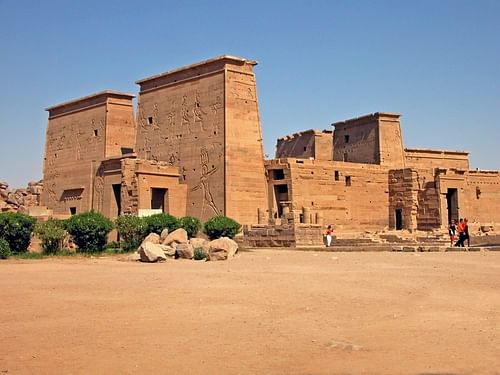
Late Period of Ancient Egypt
Overview
Around 653 BC, the Late Period of Ancient Egypt started. Egypt was unified at the time and ruled by Egyptians. This, however, was short-lived. After being conquered by the Persians in 525 BC, Egypt entered its Achaemenid Period.
What dynasties ruled during the Late Period?
In the Late Period, Egypt’s Twenty-Sixth Dynasty ruled for 125 years. Because the capital city was called Sais, this dynasty is occasionally referred to as the Saite Period. The Persian conquest of Egypt marked the start of the Twenty-Seventh Dynasty.
Four short-lived dynasties (the Twenty-Eighth to the Thirty-First) ruled Egypt in the years before to the arrival of the Greeks.
Egypt Reunites
The Third Intermediate Period saw the division of Egypt. Egypt came together to repel foreign invaders as a result of the Assyrian invasion. Egypt came together under Pharaoh Psamtik II, and the Late Period got underway.
Psamtik II and later Twenty-Sixth Dynasty rulers aimed to restore Egypt to its previous splendor. Many of the ancient customs were revived, including the construction of impressive temples and monuments to the gods and pharaohs. They also repelled attacks from the Babylonians, a brand-new foreign foe.
The Persians Invade
King Cambyses II of the Persian Empire invaded Egypt in 525 BC. At the Battle of Pelusium, they decisively defeated the Egyptian army and seized control of Egypt.
Egypt Under Persia
The Persian Empire was the biggest empire in the world when it overthrew Egypt. After that, Egypt joined the Persian Empire as a “satrapy” (similar to a province). The Twenty-Seventh Dynasty came to be recognized as the satrapy’s rulers. For one hundred years, Persia ruled over Egypt.
Under the leadership of the Persian King Darius I, Egypt flourished. Darius constructed temples and presented himself to Egypt as a pharaoh. Later Persian kings, like Xerxes, treated Egypt severely, sparking uprising and much internal strife.
Alexander the Great Invades
Alexander the Great’s invasion in 332 BC put an end to Persian hegemony. With his victory over the Persians, Alexander integrated Egypt into his huge kingdom. Ptolemy I Soter, a Greek ruler, created the Ptolemaic Dynasty in Egypt when Alexander the Great died.
Facts About the Late Period and Persian Rule
- Pharaoh Neko II attempted to build a canal from the Red Sea to the Nile River.
- Psamtik II allied with the Greeks to help oust the Assyrians from Egypt.
- During the late period, several different peoples and cultures from around the Mediterranean impacted the culture of Egypt. Immigrants from Greece, Phoenicia, and Palestine all settled communities in Egypt.
- The Persian Empire is sometimes called the Achaemenid Empire.
- Ptolemy I Soter was one of Alexander the Great’s top generals.
Read also: New Kingdom of Ancient Egypt
