 The First Encyclopedia Your First Knowledge Home
Han Dynasty History and Facts
Learn about Han Dynasty History and Facts of Ancient China. The Emperors and accomplishments
Overview:
One of the great dynasties of ancient China was the Han. The Han dynasty, sometimes referred to as the Golden Age of Ancient China, is credited with establishing much of Chinese civilization. China was able to grow and become a significant world power during this time of peace and prosperity.
Han Dynasty History and Facts
When was the Han Dynasty?
Between 206 BC to 220 AD, the Han Dynasty ruled for more than 400 years. After the Qin Dynasty, it was the second Imperial dynasty. The Three Kingdoms period followed it.
How did it get started?
Peasants rose up in rebellion against the Qin Emperor to start the Han Dynasty. Liu Bang, a member of a rural household, served as its leader. Following the death of the Qin Emperor, Liu Bang and his foe Xiang Yu engaged in a four-year war. War won, Liu Bang became the next emperor. He founded the Han Dynasty and changed his name to Han Gaozu.
Civil Service
The creation of the civil service was one of Emperor Gaozu’s initial initiatives. He formed a group of intelligent guys around him to assist him in running the empire. Later Han emperors would institute tests and educational institutions to guarantee that only the smartest individuals would lead the country. Over 2,000 years would pass while this form of government was in place.
Major Advances
The Han Dynasty was a time of innovation and scientific advancement. Paper was one of the most significant inventions. Paper made it simple for the administration to preserve records and distribute directives across the empire.
Along with achievements in the fields of health, mathematics, construction, agriculture, engineering, and astronomy, other significant inventions include acupuncture, crop rotation, and iron casting.
What was life like?
City dwellers were numerous. For the wealthy who resided in expansive homes tastefully adorned with carpets and artwork, life was good. They had advanced education and donned silk robes. For the impoverished who resided in cramped housing and frequently went without food, city life was challenging.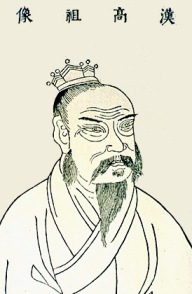
The peasants had a better quality of life in the country. While they often had access to food and shelter, they had to labor hard. The Han Dynasty saw a decrease in taxes and a rise in respect for those who worked the land.
In general, people did not appreciate merchants. However, they were able to amass wealth, particularly as trade expanded as a result of the Silk Road and the nation’s general peace. To force merchants to wear white clothing and pay hefty taxes, laws were created.
Facts about Han Dynasty
- The biggest products in the Han economy were iron, salt, copper work, and silk.
- The Silk Road was established during the Han Dynasty. This trade route from China to Europe was a great source of wealth and luxury items.
- Buddhism first came to China during this time.
- Social status was very rigid. There were 20 ranks of status and each level had increased privileges. Merchants were ranked low while craftsmen, doctors, and farmers were ranked fairly high.
- There was a short period when the Han Dynasty was overthrown by the Xin Dynasty. This lasted from 8 – 22 AD. The time before the Xin is often called the Western Han and the time after the Eastern Han.
- The name of the first Han emperor, Gaozu, means “high ancestor.” He named his palace Lasting Joy.
Read also: Zhou Dynasty History and Facts
