 The First Encyclopedia Your First Knowledge Home
Gods and Mythology of ancient Rome
The gods were many for the Romans. There was a deity for almost anything. Many of the gods of the tribes the Romans subjugated were also adopted by them. Greek gods were highly beloved by them. A shrine was a common feature of Roman homes, where people would worship their own domestic deity.

Gods and Mythology of ancient Rome
Roman Gods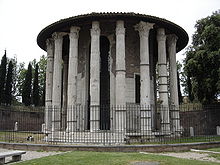
Greek mythology was greatly incorporated into Roman mythology. They adopted Roman names for almost all of the Greek gods and claimed them as their own. Several prominent Greek-derived Roman deities include the following:
- Jupiter came from the Greek god Zeus. Jupiter was the king of the gods and the god of thunder and lighting. He was the patron god of Rome.
- Juno: Juno was the equivalent of the Greek goddess Hera. Juno was Jupiter’s wife and queen of the gods. Juno was considered the protector of Rome.
- Mars: Mars came from the Greek god Ares. Mars was the god of war, and Jupiter was Juno’s son.
- Mercury: Mercury was the equivalent of the Greek god Hermes. He was the god of trade.
- Neptune: Neptune came from the Greek god Poseidon. He was the god of the sea and brother to Jupiter. He was also the patron of horses. Neptune’s weapon was a great trident.
- Venus: Venus was the equivalent of the Greek goddess Aphrodite. She was the god of love and beauty.
- Apollo: Apollo was taken directly from the Greek god Apollo. He was the god of music, poetry, and archery. His twin sister was Diana.
- Diana: Diana was taken from the Greek goddess Artemis. She was the goddess of the hunt, archery, and animals. Her symbols included the moon, the snake, and the bow and arrow.
- Minerva: Minerva comes from the Greek goddess Athena. She was the goddess of wisdom.
- Ceres: Ceres was the equivalent of the Greek goddess Demeter. She was the goddess of agriculture and the seasons. It’s from the name Ceres that we get the name for cereal.
- Vulcan: Vulcan comes from the Greek god Hephaestus. He was the blacksmith for the rest of the gods and the god of fire. The word volcano comes from the name Vulcan.
- Bacchus: Bacchus comes from the Greek god Dionysus. He was the god of wine and theater. He was the youngest of the major gods and the only one born to a mortal.
Romulus and Remus
Rome was established by two twin gods, Romulus and Remus, according to early Roman mythology. Both Romulus and Remus desired to establish a new city. Remus disagreed and preferred to find it on Aventine Hill, while Romulus wanted to find it on Palatine Hill. After a brawl, Romulus killed Remus. Romulus then established the Senate and the Roman legion in addition to founding the city of Rome.
Imperial Cult
Rome’s emperors were revered by the Imperial Cult. Beginning with Julius Caesar, who overthrew the Roman Republic and assumed dictatorship, the Roman emperors were elevated to the status of gods, or deified. The authorities of Rome were able to increase their influence in this way. With the exception of a few evil ones like Nero and Tiberius, the majority of emperors were elevated to godhood. This custom persisted until the Christian conversion of Emperor Constantine.
Christianity
Rome frequently persecuted Christians because they believed in a single genuine God while the Romans worshipped numerous gods. They were formerly threatened with death unless they worshipped and offered sacrifices to the Roman gods. The lions killed a lot of people in the arenas. The persecution ended when Emperor Constantine came to power and became a Christian.
Temples
Rome and the Roman Empire were home to a large number of temples. Usually, a single god was the object of their construction, and the god’s statue stood in the center. The Temple of Jupiter on Capitoline Hill was the most significant temple in classical Rome. Every Roman god had a temple called the Pantheon. Additionally, temples to Julius Caesar and Augustus were constructed.
Festivals
To honor their gods, the Romans observed festivals and public holidays. To celebrate, they would frequently have games and a big feast. The Romans observed several significant holidays, including Lupercalia, Saturnalia, and Consualia.
Read also: Literature of Ancient Rome
