 The First Encyclopedia Your First Knowledge Home
Engineering and construction in ancient Rome
The Romans were superb constructors and engineers. Many of the structures and technical endeavors they created are still standing, and some are even in use now. The Romans were particularly skilled at the following projects:
Engineering and construction in ancient Rome
Roads
Roman roads had a significant role in both the Roman military and economy. In addition to making it simpler for trade to flow between cities, they made it possible for the Roman Legions to advance swiftly throughout the burgeoning empire.
The roads were built to last, in spite of the surrounding conditions. They were constructed with numerous masonry layers, including concrete. Even now, people still use these sturdy roadways. Additionally, a hump in the construction allowed water to flow to the margins. This prevented flooding on the roadways and made it possible to utilize them during inclement weather.
The Colosseum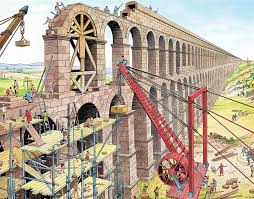
A magnificent example of Roman engineering and construction is the Colosseum in Rome. The Colosseum was a vast outdoor arena that hosted plays, mock fights, gladiator bouts, and other events for up to 50,000 spectators. The massive Colosseum is free-standing and strengthened by its many arches. Even though some of it has been destroyed by earthquakes, most of it still survives today. It was constructed using about 131,000 cubic yards of stone, measuring 615 feet long by 510 feet broad.
Aqueducts
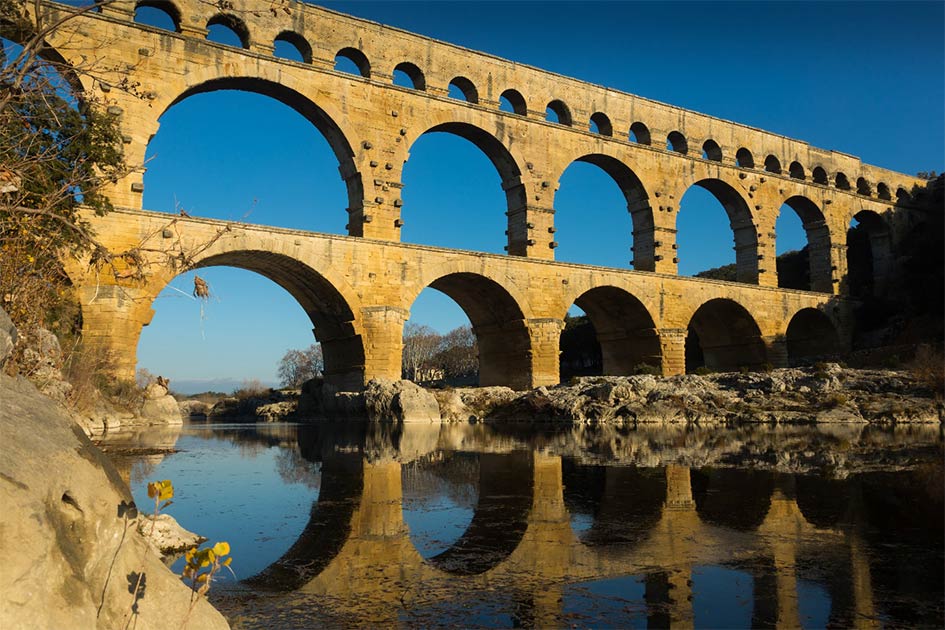
The Romans constructed aqueducts, which are lengthy waterways, to supply water to their towns. A large number of Roman aqueducts were underground. The water that was transported into the cities was utilized for sewage, bathing, and drinking water. Usually, it was brought to a public fountain so that people could obtain their water in buckets. The Romans developed plumbing so far that running water was available in many of their large, affluent homes.
Bridges
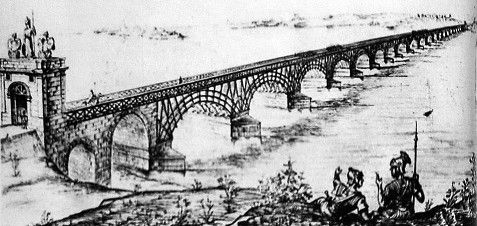
The Romans constructed lengthy, sturdy bridges. Today, several of their bridges remain intact. They constructed their bridges out of stone and concrete, using the arch as the main structural element to give them strength. The Danube Bridge, constructed by Trajan, was the biggest Roman bridge ever constructed. It measured 62 feet high by approximately 3700 feet long.
Architecture
Roman architecture was greatly influenced by Roman engineering. Since they were so strong, arches were frequently employed. Because domes allowed builders to create expansive ceilings with lots of open space, the Romans also used them.
Facts about Roman Engineering
- The Romans built over 400,000 km of roads, including 29 highways that lead to the city of Rome.
- The Latin word for road is via. The plural of via is viae. Roman roads generally had the name via in them, like the Via Appia or the Via Flaminia.
- All the aqueducts in the city of Rome together totaled around 500 miles in length.
- The Romans were among the first civilizations to harness water power.
- It is estimated that the Romans built over 900 bridges in their empire.
Read also: Housing and Homes in Ancient Rome
