 The First Encyclopedia Your First Knowledge Home
Cuban Missile Crisis in the Cold War
Learn about the Cuban missile crisis in the Cold War and its impact on the ideological conflict between the two poles

How was the Cuban Missile Crisis involved in the Cold War?
Overview about Cuban Missile Crisis
- In October 1962, the Soviet provision of ballistic missiles to Cuba led to the most dangerous Cold War confrontation between the United States and the Soviet Union and brought the world to the brink of nuclear war.
- US President John F. Kennedy and Soviet Premier Nikita Khrushchev negotiated a peaceful resolution to the situation over the course of two stressful weeks.
- The crisis reignited efforts to stop the arms race, showed the perils of brinksmanship, and stoked concerns of nuclear war.
The Cuban Revolution
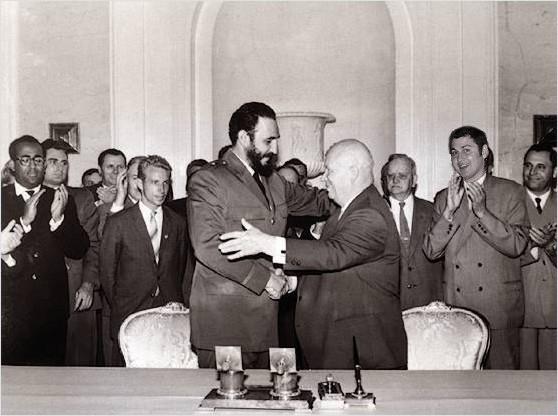
Castro turned to the Soviet Union for assistance as relations between the US and Cuba worsened. The Soviet Union entered into several trade and aid deals with Cuba, loaned Castro guns and military equipment, and supported the Cuban Revolution politically in the UN and other international organizations.
Origins of the Cuban Missile Crisis
The failed Bay of Pigs invasion, during which US-backed Cuban exiles attempted to spark a revolution against Castro but were routed by the Cuban military, is where the Cuban Missile Crisis had its start. Castro looked to the Soviets for defense against retaliation from the US after the invasion. Cuba received nuclear weapons from the Soviet Union with the agreement that the acquisition would be kept a secret until the missiles were fully operational.
superscript beginning, superscript ending Khrushchev said that his goal for giving Cuba with nuclear weaponry was to preserve the Cuban Revolution against US invasion and to alter the global balance of power in favor of the Soviet Union.
The locations of the missile installations were discovered in October 1962 during American U-2 spy plane flights over Cuban soil. This finding marked the beginning of the Cuban Missile Crisis. These weapons had huge strategic ramifications because they could readily reach American objectives like New York City and Washington, D.C.

Aerial view of the missile site in Cuba, 1962.
The Kennedy administration ordered the immediate removal of the missiles that had already been supplied and instituted a naval blockade to stop any additional missiles from being transferred to Cuba. This strategy carried the risk that, should the Soviet Union refuse to withdraw the missiles, the United States would be forced to exacerbate the crisis by approving airstrikes over Cuba to destroy the missile installations. If the Soviets reacted violently to Kennedy’s demands, backup plans were created for a full-scale invasion of Cuba and a nuclear assault on the Soviet Union.
Negotiating a peaceful outcome
Khrushchev ordered the halt of all en route weapons delivery, notwithstanding his initial denial of the missiles’ existence in Cuba and his declaration that the US naval blockade was an act of war. Kennedy and Khrushchev negotiated a peaceful resolution to the missile crisis over the course of about two weeks. The Soviets linked their placement of Jupiter missiles in Turkey, which were within striking distance of Soviet territory, with their transfer of nuclear weapons to Cuba. Kennedy committed that the US government would refrain from launching another invasion of Cuba in addition to agreeing to have the missiles removed from Turkey.
Castro was not consulted by Khrushchev at any point throughout the negotiations. This was embarrassing for Castro and appeared to show that the Russians valued relations with the United States more than those with their own friends. Castro intended to reach an agreement to stop U-2 flights over Cuban territory and close the American naval facility at Guantanamo. Finally, Khrushchev consented to withdraw all of Cuba’s nuclear missiles without even bringing up Castro’s requests.
Consequences of the Cuban Missile Crisis
Khrushchev’s departure was one of the outcomes of the missile crisis, despite Soviet attempts to depict the outcome as a win. Other Soviet leaders, who claimed that the missile crisis was evidence of Khrushchev’s careless judgment and his inability to govern the Soviet Union, drove him into retirement. As Leonid Brezhnev succeeded Khrushchev as leader, he worked to defuse tensions with the US.
After the crisis, John F. Kennedy was in a much better place. Though it is frequently forgotten that his botched handling of the Bay of Pigs invasion had contributed to the beginning of the missile crisis, his calm but forceful posture in the negotiations was hailed as superb statesmanship.
Kennedy was also persuaded by the Cuban Missile Crisis of the perils of nuclear brinksmanship. He and Khrushchev had gazed into the nuclear abyss, but they had been able to escape from it. A Moscow-Washington hotline was established at the White House to enable direct communication between the leaders of the Soviet Union and the United States in order to prevent future crises.
A pact prohibiting atmospheric and submerged nuclear testing was signed in August 1963 by the US, the USSR, and Great Britain.
Even Nevertheless, Kennedy’s simultaneous approval of a large armaments buildup that significantly increased the US nuclear arsenal and boosted US strategic superiority during the Cold War prevented the test-ban treaty from putting an end to the arms race.
