 The First Encyclopedia Your First Knowledge Home
Athena goddess: History and Facts
Discover about Athena goddess: History and Facts mythology, including her symbols, special powers, war strategy, birth, patronage of Athens, helping heroes, and the legend of Arachne.
Athena goddess: History and Facts
One of the Twelve Olympians and a goddess in Greek mythology is Athena. Her most well-known attribute is that she is Athens’ patron goddess. Many Greek heroes, like Odysseus and Hercules, received assistance from Athena throughout their travels.
How was Athena usually pictured?
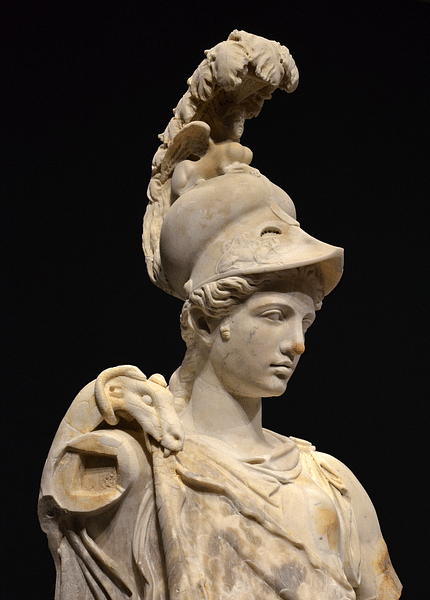
Frequently portrayed as a warrior goddess, Athena was equipped with a spear, a shield, and a helmet. At times, she would don an Aegis shield or cloak that bore the head of the monster Medusa.
What powers and skills did she have?
Athena was an immortal goddess who could not perish, much like the other Olympians. She was among the wisest and smartest of the Greek gods. She was also skilled at providing heroes with courage and military tactics.
One of Athena’s great abilities was her capacity to create practical objects and crafts. She created the chariot, rake, plow, and ship. She also created a lot of the crafts that women in ancient Greece performed, such as weaving and ceramics.
Birth of Athena
Zeus, the chief of the Olympian gods, was Athena’s father; Metis, a Titan, was her mother. Zeus feared the authority of Metis, despite their marriage. He once came upon a prophecy that one of Metis’ offspring would ascend to the throne. He quickly ingested Metis and deemed the issue resolved.
Zeus had no idea that Metis was already expecting Athena. She gave birth to Athena inside of Zeus and created a spear, shield, and helmet for her. Zeus suffered from a severe headache as Athena developed inside his skull. He eventually had enough and had the deity Hephaestus use an ax to crack open his head. Zeus’s head opened to reveal Athena. Fully grown, she carried a shield and a spear in her possession.
Protector of the City of Athens
After defeating the deity Poseidon in a contest, Athena was named the patron goddess of the city of Athens. Every god gave a gift to the city. The horse was created by Poseidon and given to the city. The olive tree was created by Athena and donated to the city. Although the city’s residents found both gifts to be beneficial, they concluded that the olive tree was more priceless, and Athena was named after her.
In honor of Athena, the citizens of Athens constructed a huge acropolis in the city’s center. The Parthenon, a stunning temple dedicated to Athena, was built atop the Acropolis.
Helping out Heroes
Greek mythology makes Athena famous for assisting heroes on their quests. She assisted Jason in creating his enchanted ship, the Argo; Perseus in his quest to vanquish Medusa; Odysseus in his travels in the Odyssey; and Hercules in completing his twelve labors.
Legend of Arachne
In Greek mythology, Athena was regarded as the finest weaver and the creator of art. But one day, Arachne, the daughter of a shepherd, declared herself to be the finest weaver in the world. This infuriated Athena, who went to meet Arachne and issued a challenge to a weaving competition. Athena drew a graphic of how the gods punished mortals for presuming to be on par with them when the competition got underway. Then Arachne drew a depiction of the gods meddling and manipulating mortal life.
Athena was enraged when she witnessed Arachne’s weaving after the competition. The work not only outperformed Athena’s, but it also made the gods appear ridiculous. Arachne was then cursed by her and transformed into a spider.
Facts About the Greek Goddess Athena
- She was a close friend and was attended to by Nike, the goddess of victory.
- She is pictured on the state seal of California.
- Athena represented the more glorious aspects of war, such as courage, strategy, and discipline.
- She helped Achilles kill the great Trojan warrior Hector in the Trojan War.
- Her other names and titles include “protector of the city,” “Pallas,” “goddess of council,” and “gray eyes.”
Read also:Hermes Greek god: history and facts
