 The First Encyclopedia Your First Knowledge Home
Arts of Ancient Egyptian
Learn about Arts of Ancient Egyptian. Study the statues and wall paintings of this great civilization.
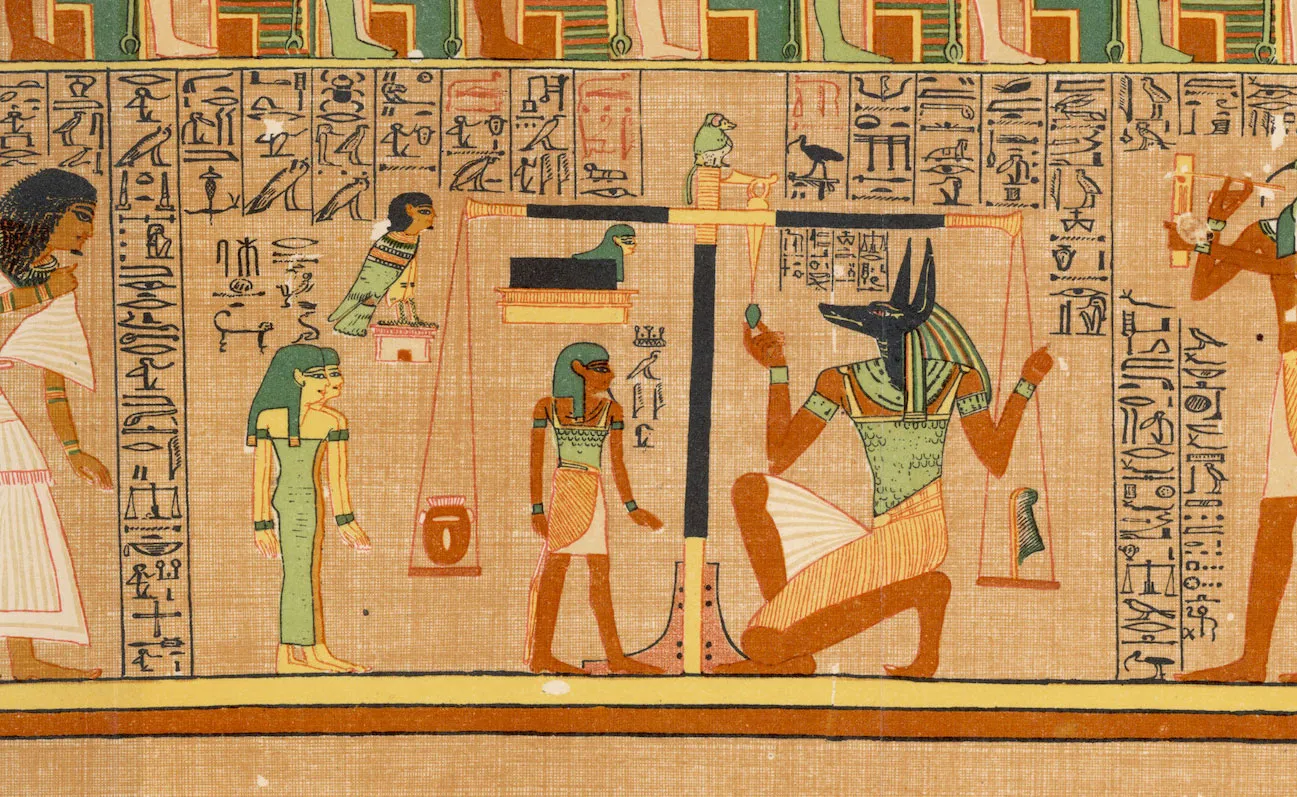
Arts of Ancient Egyptian
Overview
The art of the Ancient Egyptians is a major source of information about them. We may discover information about them, like their appearance, the kind of clothing they wore, the jobs they had, and the things they valued, from the numerous works of art they produced.
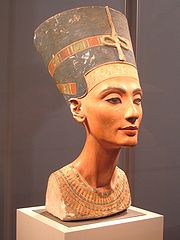
Queen Nefertiti
Similar Art for Over 3000 Years
For more than three thousand years, the ancient Egyptian civilisation dominated the Nile region. Surprisingly, there weren’t many changes in their art over that time. For the next 3000 years, the most renowned artists copied the original style of art, which was first employed in 3000 B.C.
Religion and Art
For more than three thousand years, the ancient Egyptian civilisation dominated the Nile region. Surprisingly, there weren’t many changes in their art over that time. For the next 3000 years, the most renowned artists copied the original style of art, which was first employed in 3000 B.C.
Egyptian Sculpture
The massive statues created by the Egyptians are well known. The Ramses II statues at the Abu Simbel temples and the Great Sphinx of Giza are two examples of this.
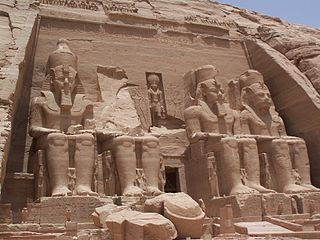
The statues of Ramses II are depicted in the image above. Each of them is taller than 60 feet. Over 240 feet long is the Giza Sphinx!
Despite being known for their enormous monuments, the Egyptians also produced more intricate, smaller sculptures. Alabaster, ivory, limestone, basalt, wood that had been gilded with gold, and occasionally even pure gold were among the materials they employed.
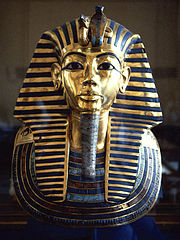
Golden funeral mask of Tutankhamun by Jon Bodsworth
An illustration of complex Ancient Egyptian sculpture can be seen above. It is a pharaoh named Tutankhamen’s funeral mask. His facial expression is representative of how all Egyptian pharaohs have appeared throughout history. Semiprecious stones are used to color the collar, and blue glass is used to create the stripes on the headdress. 24 pounds of pure gold make up the remainder of the mask.
Egyptian Painting and Tomb Walls
Ancient Egyptian royalty frequently had murals adorning the walls of their tombs. The purpose of these artworks was to aid the deceased in the afterlife. They frequently featured the deceased entering the afterlife after being buried. They would portray happy afterlife scenes for this person. One painting depicts the hunter who was buried alongside his wife and son.
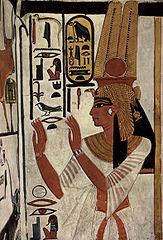
The above painting is a picture on a tomb wall of Queen Nefertari, wife of Ramses the Great.
Relief
A sculpture that is a part of a wall or building is called a relief. They were frequently engraved into the surfaces of Egyptian temples and tombs. Typically, reliefs were painted as well.
Facts about Ancient Egyptian Art
- They mostly used the colors blue, black, red, green, and gold in their paintings.
- A lot of Egyptian art depicted the pharaohs. This was often in a religious sense as the pharaohs were considered gods.
- Many of the paintings of Ancient Egypt survived for so many thousands of years because of the extremely dry climate of the area.
- Small carved models were sometimes included inside tombs. These included slaves, animals, boats, and buildings that the person may need in the afterlife.
- A majority of the art hidden in tombs was stolen by thieves over thousands of years.
Read also: Daily Life in Ancient Egypt
