 The First Encyclopedia Your First Knowledge Home
Ancient Rome Legacy
The history of the world was profoundly impacted by the ancient Roman culture. At its height, Ancient Rome not only occupied a sizable territory but also lasted for over a millennium. Western civilization is still influenced by ancient Rome in a number of domains, including language, government, law, engineering, architecture, and religion.
Ancient Rome Legacy
Government
The Roman Republic served as a model for many contemporary administrations. The Romans established and documented ideas like representation, veto power, and balance of powers.
Like the Roman Republic, the United States has three branches of government. The President, who heads the Executive Branch, is comparable to Rome’s elected consuls. The Roman assemblies, such as the Senate, are comparable to the Legislative Branch of the government. Lastly, the Judicial Branch has resemblance to the Roman Praetors. The Senate, one chamber of Congress in the United States, is even named after the Senate of Rome.
Law
The laws of many nations today are greatly influenced by Roman law. Roman law and Roman philosophy impacted legal concepts such as companies, civil rights, trial by jury, contracts, personal property, and legal wills.
Language
During the Roman Empire, the Latin language used by the Romans became widely used throughout most of Western Europe. Latin is the ancestor of several languages. We refer to these languages as “Romance languages.” Among them are Romanian, Italian, Portuguese, Spanish, and French. Currently, 800 million people speak a Romance language worldwide.
Architecture
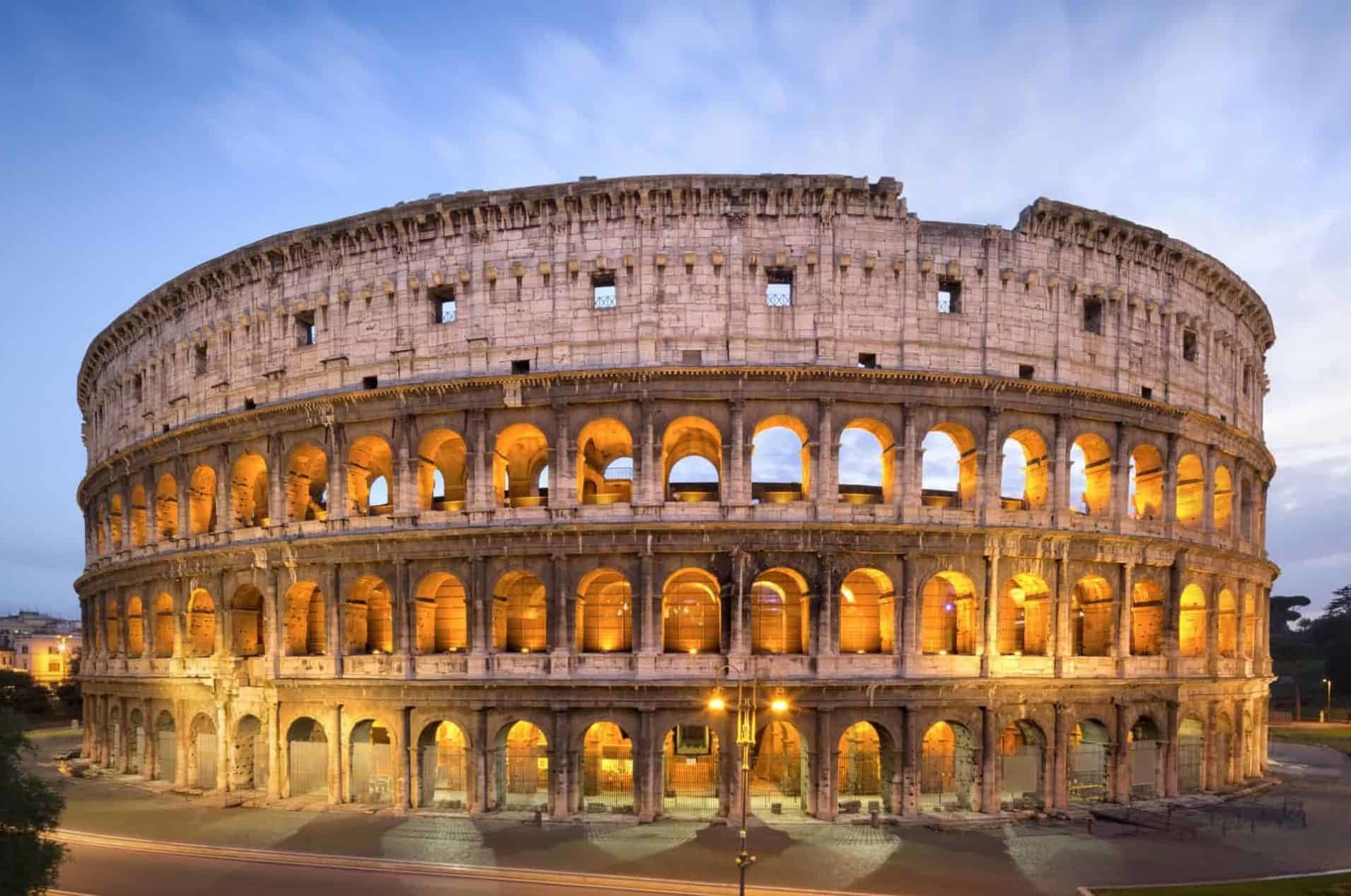
Many modern building designs are still influenced by the structures and architecture of ancient Rome. Many of the Roman concepts were revived in the eighteenth-century neoclassical architectural movement. Government buildings, sizable banks, and even certain well-known structures like the US Capitol Building exhibit Roman architectural influence.
Engineering and Construction
Roman technical advancements were dispersed throughout the empire, influencing the western world. They constructed sturdy roadways that aided in boosting trade and facilitating the soldiers’ rapid movement around the empire. Nowadays, a lot of these routes are still in use. Romans were renowned for their civic undertakings as well. To provide water to the cities for everyone’s use, they constructed aqueducts. They also constructed public structures like baths. The Romans developed concrete in order to construct many of these constructions. Roman concrete made it possible for them to construct sturdy structures at a lesser cost than stone.
Christianity
Through the development of Christianity, the last half of the Roman Empire had a significant influence on European religion. The Catholic Church, which would have a significant impact on Europe for the ensuing millennium, was founded in Rome. Christianity is the most common religion in the world today.
Facts About the Legacy of Ancient Rome
- The Roman alphabet is used by many languages around the world including the Romance languages and English. It was first developed by the Etruscans.
- The Renaissance was a time when the art and ideas of Ancient Rome and Greece were rediscovered after the Middle Ages.
- Roman numerals are sometimes still used today. The number of the NFL Super Bowl was written using Roman numerals up until Super Bowl 50, which is written as “50” rather than the Roman number “L.”
- Latin terms are still commonly used in science, medicine, and law.
- Many words in the English language were influenced by Latin and have Latin roots.
Read also: The Arena and Entertainment in ancient Rome
