 The First Encyclopedia Your First Knowledge Home
War has returned to the Gaza Strip
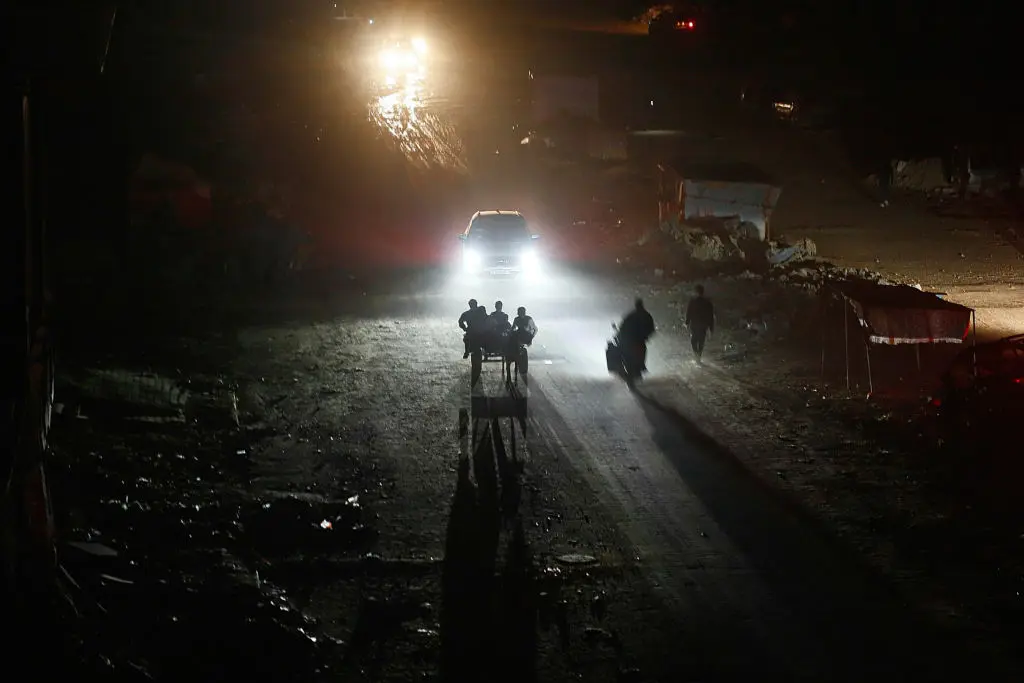
War has returned to the Gaza Strip
Gaza’s DEIR AL-BALAH Israel said it was hitting dozens of Hamas targets in its most intense attack in the Gaza Strip since a cease-fire went into force in January as it unleashed a barrage of airstrikes across the region early Tuesday. At least 44 people were killed, according to Palestinian officials.
According to Prime Minister Benjamin Netanyahu, he ordered the strikes because continuing negotiations to prolong the cease-fire had not produced any results. The operation was open-ended and anticipated to grow, according to officials.
Israel’s defense minister, Israel Katz, said the “gates of hell will open in Gaza” if the hostages aren’t released. “We will not stop fighting until all of our hostages are home and we have achieved all of the war goals,” he said. Explosions could be heard throughout Gaza, and Gaza’s Health Ministry said at least 44 people were killed in the new wave of airstrikes. The territory’s civil defense agency said its crews were having a difficult time carrying out rescue efforts because various areas were being targeted simultaneously.
War has returned to the Gaza Strip
Talks on a second phase of the cease-fire had stalled
The strikes came two months after a ceasefire was reached to pause the war. Over six weeks, Hamas released roughly three dozen hostages in exchange for nearly 2,000 Palestinian prisoners in the first phase of the cease-fire. But since that cease-fire ended two weeks ago, the sides have not been able to agree on a way forward with a second phase aimed at releasing the nearly 60 remaining hostages and ending the war altogether.Netanyahu has repeatedly threatened to resume the war and early this month cut off the entry of all food and aid deliveries into the besieged territory to put pressure on Hamas. “This comes after Hamas repeatedly refused to release our hostages and rejected all offers it received from the U.S. presidential envoy, Steve Witkoff, and from the mediators,” Netanyahu’s office said early Tuesday. Taher Nunu, a Hamas official, criticized the Israeli attacks. “The international community faces a moral test: either it allows the return of the crimes committed by the occupation army or it enforces a commitment to ending the aggression and war against innocent people in Gaza,” he said.
Gaza already was in a humanitarian crisis
The war erupted with Hamas’ Oct 7, 2023, cross-border attack, which killed some 1,200 people and took 250 others hostage. Israel responded with a military offensive that killed over 48,000 Palestinians, according to local health officials, and displaced an estimated 90% of Gaza’s population. The territory’s Health Ministry doesn’t differentiate between civilians and militants but says over half of the dead have been women and children.The cease-fire had brought some relief to Gaza and allowed hundreds of thousands of displaced Palestinians to resume to what remained of their homes. But the territory is coping with vast destruction, with no immediate plans to rebuild. A resumption of the war threatens to reverse any progress made in recent weeks toward halting Gaza’s humanitarian crisis. The return to fighting could also worsen deep internal fissures inside Israel over the fate of the remaining hostages. Many of the hostages released by Hamas returned emaciated and malnourished and described harsh conditions in captivity. The released hostages have repeatedly implored the government to press ahead with the cease-fire to return all remaining hostages, and tens of thousands of Israelis have taken part in mass demonstrations in recent weeks calling for a cease-fire and return of all hostages. Since the cease-fire in Gaza began in mid-January, Israeli forces have killed dozens of Palestinians who the military says approached its troops or entered unauthorized areas.Still, the deal has tenuously held without an outbreak of wide violence. The ceasefire’s first phase saw an exchange of some hostages held by Hamas in return for the freeing of Palestinians imprisoned by Israel. Egypt, Qatar, and the United States have been trying to mediate the next steps in the cease-fire. Israel wants Hamas to release half of the remaining hostages in return for a promise to negotiate a lasting truce. Hamas instead wants to follow the cease-fire deal reached by the two sides, which calls for negotiations to begin on the cease-fire’s more difficult second phase, in which the remaining hostages would be released and Israeli forces would withdraw from Gaza. Hamas is believed to have 24 living hostages and the bodies of 35 others.
AP reporter Ghaith Alsayed in Damascus, Syria, contributed to this report.
