 The First Encyclopedia Your First Knowledge Home
Literature of Ancient Rome
Roman literature’s history dates back to the third century BC. Its “Golden Age” coincided with the early years of the Roman Empire and Augustus’ reign. Roman poets and historians produced a vast body of work. They gave numerous official addresses and also wrote letters.
Literature of Ancient Rome

What language did they use?
In ancient Rome, Latin was the primary writing language. Because so many individuals in the eastern part of the Roman Empire spoke Greek, it was also widely spoken.
What did the Romans write on?
Papyrus scrolls, which were created from the papyrus plant in Egypt, and parchment, which were pages made from animal skin, were used to write important documents. They used a metal pin soaked in ink to write on it. They employed thin pieces of wood or a wax tablet for more sporadic daily writing.
Poetry
Poetry is arguably the most well-known genre of Roman literature. The most well-known Roman poets are Ovid, Horace, and Virgil.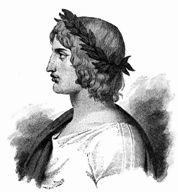
Virgil (70 BC to 19 BC): The epic poetry Aeneid is credited to Virgil. The tale of Aeneas, a Trojan hero, is told in the Aeneid. Numerous significant moments in Rome’s history are included.
Horace (65 BC 8 BC): Horace is well-known for his Odes, a collection of lyric poetry. Satires and epistles are some of Horace’s other literary works.
Ovid (43 BC to 17 AD): Ovid’s epic Metamorphoses is his most well-known composition. It narrates the world’s history from its origin until Julius Caesar’s elevation to godhood. Ovid was renowned for his love poetry as well.
Speeches and Rhetoric
In ancient Rome, the capacity to persuade people through public speaking was seen as a critical skill in the art of rhetoric. Roman statesmen were prolific writers of speeches and ideas. Some of these men’s publications had a significant influence on Roman literature and the usage of the Latin language. Among these men, Cicero gained the highest notoriety for his writings on philosophy, speeches, and correspondence. Cicero was ultimately assassinated for his beliefs when he opposed Mark Antony.
Historians
Numerous authors who chronicled Rome’s history are also included in Roman literature. Livy was the most well-known historian in Rome. Writing 142 volumes of history, Livy documented events from Rome’s origins to Augustus’s rule. Quintus Fabius Pictor, Tacitus, Sallust, and Pliny the Elder are a few other notable historians.
Roman Philosophy
The Romans become interested in philosophy after subduing the Greeks. Stoicism was the most widely accepted school of philosophy among the Romans. Stoicism held that there was a great deal of order and reason in the universe. It stated that everyone ought to constantly strive to do their best, regardless of their status or level of money. The Romans found these concepts appealing. Marcus Aurelius, Cicero, and Seneca are a few well-known Roman philosophers.
Roman Records
The Romans are renowned for their extensive written record-keeping. Their vast dominion was kept so well-organized by this method. Every Roman citizen’s details, including as age, marital status, and military service, were kept on file. In addition, they maintained written records of all government legislation and decrees, as well as wills and court cases.
Facts About the Literature of Ancient Rome
- Julius Caesar wrote some historical works including the De Bello Gallico, which told the story of his military campaigns of Gaul.
- Much of Roman literature was influenced and inspired by Greek literature.
- It is said that the philosophical writings of Cicero influenced the Founding Fathers of the United States.
- One of the most important Roman writings on stoic philosophy, Meditations, was written by Emperor Marcus Aurelius.
Read also: Art of Ancient Rome
