 The First Encyclopedia Your First Knowledge Home
The city of Rome in ancient empire
Rome served as the center of the ancient Roman culture. It was situated close to central Italy’s west coast. Italy’s capital city is Rome as of right now. The city expanded along with the empire from its modest beginnings. The metropolis in ancient times was home to more than a million people at one point. For more than a millennium, the city acted as the global center of power.
The city of Rome in ancient empire
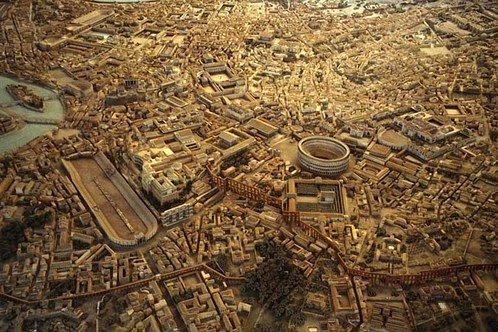
The city of Rome in ancient empire
Roman Roads
Rome’s main thoroughfares headed into the city. The principal routes that led into Rome were the Via Appia, the Via Aurelia, the Via Cassia, and the Via Salaria. The Latin word for road was Via. There were numerous paved streets inside the city.
Water
Numerous aqueducts were used to supply water to the city. While the rest of the population obtained their water from fountains positioned throughout the city, certain wealthy people had running water in their homes. In addition, there were lots of public baths where people went to mingle and take baths.
Founding of Rome
According to Roman mythology, on April 21, 753 BC, the half-god twins Romulus and Remus established Rome. Rome was called for Romulus, who assassinated Remus to become its first king.
The Seven Hills
Aventine Hill, Caelian Hill, Capitoline Hill, Esquiline Hill, Palatine Hill, Quirinal Hill, and Viminal Hill were the seven hills upon which the city of Ancient Rome was constructed. Romulus is credited with founding the first city on Palatine Hill.
The Forum
The Forum stood at the heart of the city and Roman public life. This was a rectangular plaza where trade and other public activities might be conducted, encircled by public structures like basilicas and temples dedicated to the gods. The forum hosted numerous important events in the city, including elections, speeches in public, court cases, and triumphal processions.
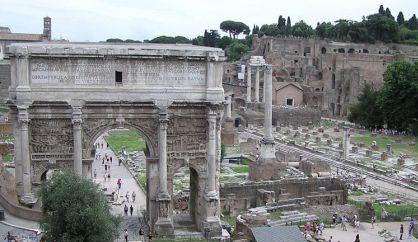
Many important buildings were in or around the forum. Some of these included:
- The Regia – A place where the original kings of Rome lived. Later it became the office for the head of the Roman priesthood, the Pontifex Maximus.
- The Comitium – The main meeting place for the Assembly and the center of politics and judicial activity in Rome.
- Temple of Caesar – The main temple where Julius Caesar was honored after his death.
- Temple of Saturn – Temple to the god of agriculture.
- Tabularium – The main records office of Ancient Rome.
- Rostra – A platform where people would make speeches.
- Senate Curia – The place where the Senate met.
- Arch of Septimius Severus – A giant triumphal arch.
In later years the forum would become so crowded with people and buildings that many important functions had to move to other areas of the city.
Other Buildings
Numerous other notable and significant structures, including Pompey’s Theatre, the Colosseum, the Temple of Jupiter, the Circus Maximus, and the Pantheon, could be found in the heart of Rome.
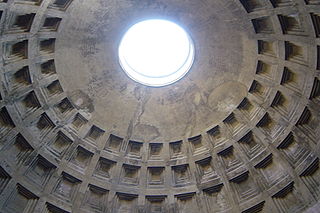
Stone, concrete, and marble were used in the construction of many of the major government structures as well as the wealthy’s residences. But the impoverished people’s dwellings were made of wood. Rome had experienced numerous catastrophic fires throughout its history, and these residences posed a serious fire risk.
The city of Rome in ancient empire
Read also: Life of Women in Ancient Rome
