 The First Encyclopedia Your First Knowledge Home
History of Greek City-States
History of Greek City-States
Learn about the History History of Greek City-States. Powerful cities such as Corinth, Thebes, Argos, and Rhodes.
History of Greek City-States
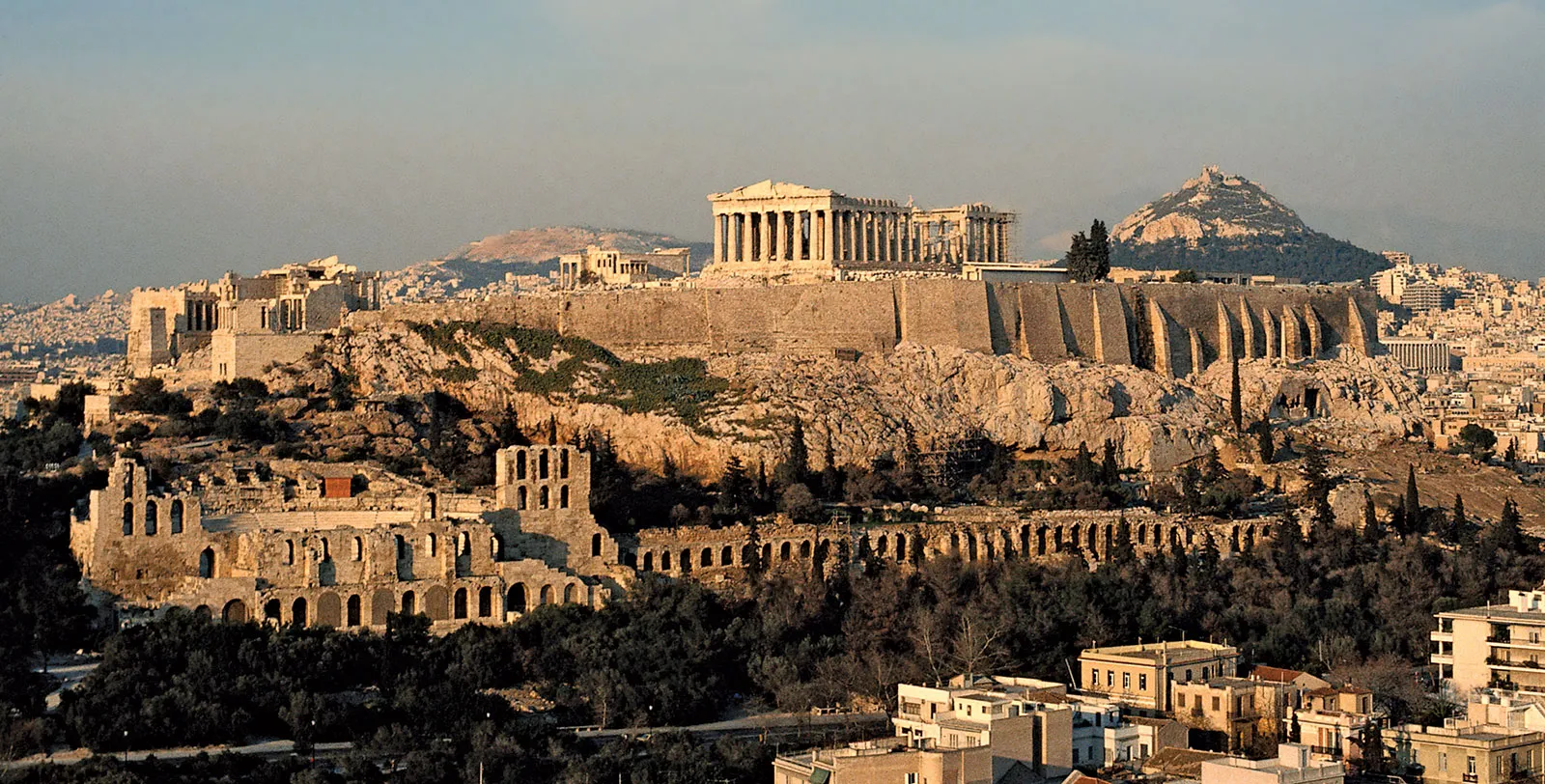
Ancient Greece was made up of a variety of city-states rather than being a single nation or empire united under a single administration. Each city-state had a potent city at its heart. The city had sway over the surrounding countryside. It occasionally oversaw smaller, weaker cities as well. “Polis” was the Greek term for a city-state.
Each polis, or city-state, had its own administration. A few city states were monarchies under the control of kings or despots. Others had oligarchies where a small number of strong men controlled councils. The democratic form of governance was created in the city of Athens, which also had many years of popular control.
There were other significant and significant city-states throughout the history of Ancient Greece in addition to the two most strong and well-known city-states, Athens and Sparta. Here are a few illustrations:
Corinth
With two seaports, one on the Saronic Gulf and one on the Corinthian Gulf, Corinth was a trade metropolis in a prime location. As a result, it was one of Ancient Greece’s wealthiest cities. The Corinthians produced their own coinage and mandated that merchants utilize them when doing business in their city.
Perhaps Corinth’s most renowned attribute is its architecture. Along with the Doric and Ionic orders, the Corinthian order is the third major style of classical Greek architecture that was created by the Corinthians.
A king presided over Corinth’s monarchical government. The Greeks received soldiers from Corinth throughout the Persian Wars. In the Peloponnesian War, they sided with Sparta against Athens.
Thebes
Thebes was a powerful city-state to the north of Corinth and Athens that was constantly switching sides in the various Greek wars. During the Persian Wars they originally sent men to Thermopylae to fight the Persians, but later, they allied with King Xerxes I of Persia to fight against Sparta and Athens. During different times in history they allied with Athens against Sparta and then switched sides to ally with Sparta against Athens.
In 371 BC, Thebes marched against Sparta and defeated the Spartans at the Battle of Leuctra. This put an end to the power of the Spartan city-state and set many of the Spartan slaves free.
Thebes was famous in Greek legend and literature as well. It is known as the birthplace of the Greek hero Hercules and played a major role in the stories of Oedipus and Dionysus. Also, perhaps the most famous Greek poet of the time, Pindar, lived in Thebes.
Argos
Argos was one of the oldest city-states in Ancient Greece, but it first became a major power under the tyrant Pheidon during the 7th century BC. During Pheidon’s reign, Argos introduced silver coins as well as a standard system of weights and measures that later became known as the Pheidonian measures.
According to Greek Mythology, Argos was founded by Argos, the son of the god Zeus. The land became dry and arid after the gods Hera and Poseidon had an argument over the city. Hera won and became the patron of the city, but Poseidon got his revenge by drying out the land.
Delphi
Delphi was the religious center of the Greek city-states. People from all over Ancient Greece visited the city to receive guidance from the famous Delphic oracle Pythia. During the classical Greek period the city became the shrine to the god Apollo after he slew the Python.
Delphi was also a center of the arts, education, literature, and trade. Located in the center of Greece, it was often called the “navel (center) of the world”. Delphi was also home to the Pythian Games, one of the most famous athletic competitions in early Greece.
Rhodes
The city-state of Rhodes was formed in 408 BC on a Greek island when three smaller cities (Ialyssos, Kamiros, and Lindos) decided to unite and make one large city. The city was prosperous for hundreds of years due to its prime location as a trade port. The city was famous for its shipbuilders as well as its giant statue called the Colossus of Rhodes. The Colossus of Rhodes was considered one of the Seven Ancient Wonders of the World. It was a statue of the Greek Titan Helios and it stood over 100 feet high.
Facts about the Greek City-State
- People living in Ancient Greece did not think of themselves as “Greek”, but as citizens of their city-state. For example, people from Corinth considered themselves Corinthians and people from Sparta considered themselves Spartans.
- The Michigan State University mascot is the Spartan.
- Many of these cities, such as Rhodes, Thebes, and Corinth were also important cities during the Roman Empire.
- The first tyrant king of Corinth, Cypselus, said that he received an oracle from Delphi telling him to take over the city.
- Each of the Seven Sages of Greece was from a different city-state. Periander was from Corinth. He was known for saying “Be farsighted with everything”. Solon was from Athens. He was known for saying “Keep everything with moderation”. The other sages included Cleobulus from Lindos, Chilon of Sparta, Bias of Priene, Thales of Miletus, and Pittacus of Mytilene.
Read also : Mycenaeans and Minoans History & Facts
