 The First Encyclopedia Your First Knowledge Home
Mummies of Ancient Egypt
Learn and discover the mummies of ancient Egypt, how they were embalmed, and what are the most famous mummies?

Mummies of Ancient Egypt
Overview
In ancient Egypt, the afterlife played a significant role in culture. Making every effort to keep the body alive as long as feasible was one of their preparations for the afterlife. They accomplished this using an embalming technique. Mummies are the name for these embalmed corpses.
How did they embalm the mummies?
To preserve the body and prevent it from decomposing, the Egyptians underwent a complex procedure. We won’t go into too much detail about the horrific circumstances because it’s kind of filthy. The main thing they attempted to do was extract all of the body’s water and fluids. Water is largely responsible for the degradation.
The Egyptians first covered the body with natron, a salty crystal material. Natron would aid in drier the body. Furthermore, part of the organs would be removed. They would cover the body and pack it with natron, then leave it to dry out for around 40 days. After the skin had dried, they would use creams to protect it before stuffing the empty body for support and wrapping the body in linen. They would wrap the entire body in numerous layers of linen strips. The layers of the wrap were adhered together with resin. It may take up to 40 days to complete the process.
After the body had been completely wrapped, it was put in a sarcophagus, a stone coffin, and covered in a cloth called a shroud.
Why did they care so much about the dead bodies?
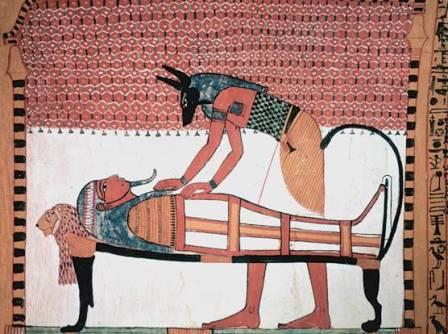 The tomb of Sennedjem
According to Egyptian religion, a person’s “ba” or soul needed a body in order to reunite with their “ka” in the afterlife. They were interested in preserving the body for all time since it was crucial to the afterlife.
Did everyone get this fancy embalming?
The best embalming was only accessible to the exceedingly wealthy. However, because everyone valued it, they purchased the best available, and the majority of the deceased were turned into mummies. Over the course of the 3,000-year-old ancient civilization, Egypt is thought to have produced 70 million mummies.
Famous Mummies
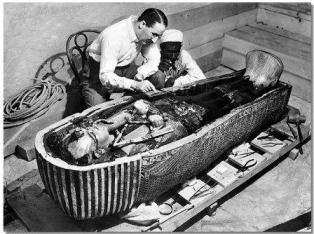
Tut’s Tomb from the New York Times
Some of the ancient Pharaohs’ mummies are still lying around. Rameses the Great and Tutankhamun were both preserved, and both can be shown in museums.
Facts about Egyptian Mummies
- Over the past few thousands of years, many of the Egyptian mummies have been destroyed in interesting ways. Some were burned for fuel, some were ground into powder to make magical potions, and some were destroyed by treasure hunters.
- The heart was left in the body because it was considered to be the center of intelligence. The brain was thrown away because it was thought to be useless.
- Sometimes the mummy’s mouth would be opened to symbolize breathing in the afterlife. It is probably this custom that led to the superstition that mummies come back to life.
- Mummies are studied by scientists without unwrapping them by using CAT scan and X-Ray machines.
Read also: Temples and Priests of Ancient Egypt
