 The First Encyclopedia Your First Knowledge Home
Dynasties of Ancient China
Dynasties of Ancient China
Learn about the dynasties of Ancient China in history. Families and emperors who ruled the country
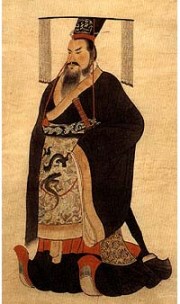
Dynasties of Ancient China
Thousands of years ago, Ancient China had a sophisticated society. Different dynasties ruled over a large portion of China over this lengthy period of time.
What is a dynasty?
A dynasty is when one family holds power over a state or territory for a protracted length of time. In most cases, the head of the family will be the monarch or emperor who rules the nation. When that ruler passes away, normally the oldest son assumes control instead. A new dynasty starts when a new family assumes power.
Mandate of Heaven
The Chinese thought that their kings and emperors had the right to rule because of the Mandate of Heaven. It indicated that person had received the blessing of the gods to govern. To uphold the Mandate of Heaven, a monarch had to be a decent and just ruler. It was assumed that when a king or dynasty lost their position of authority, they had also forfeited the Mandate of Heaven.
Major Dynasties of Ancient China
The important dynasties in Ancient Chinese history are as follows:
Dynasties of Ancient China
Xia (2205 to 1575 BC) :
The Xia, China’s first dynasty, is a poorly understood period.
Shang (1570 to 1045 BC) :
Most of the region near the Yellow River was under Shang dominion. The magnificent city of Yin served as their previous capital.
Zhou (1045 to 256 BC) :
The Mandate of Heaven was initially utilized by the Zhou, the longest-reigning dynasty in Chinese history, to support their power. Feudal lords who were related to the Zhou family reigned over a large portion of the country.
Qin (221 BC to 206 BC) :
Shi Huangdi became the first Chinese Emperor at the start of the Chinese Empire. Even though it was only a short dynasty, much was done, including the construction of the Great Wall, the establishment of weights, measures, and money standards, the construction of several roads and canals, and the adoption of a single form of writing throughout the nation. Future dynasties would employ all of these developments to fortify China.
Han (206 BC to 220 AD) :
The civil service was created by the Han dynasty to build a powerful and well-organized administration. At this period, porcelain and paper were also created. The Han also valued poetry, literature, and Confucianism.
Six Dynasties (222 to 581 AD) :
a time when there was no single leader who brought China together.
Sui (589 to 618 AD) :
China becomes unified once more under the Sui. They also constructed the Grand Canal and enlarged the Great Wall.
Tang (618 – 907) :
The Tang era is commonly referred to as the Golden Age of Ancient China because it was a time of stability and prosperity. Technology, literature, and the arts are all thriving. Chang’an, the nation’s capital, surpasses all other cities in size.
Five Dynasties (907 – 960) :
The Tang empire is overthrown by a peasant uprising, which also ushers in a period of conflict.
Song (960 – 1279) :
Under the Song dynasty, China is once again a global leader in science and technology, producing innovations like gunpowder and the compass.
Yuan (1279 – 1368) :
Kublai Khan, a Mongol monarch, founded the Yuan dynasty after the Mongols conquered the Song in a protracted conflict.
Ming (1368 – 1644) :
The Forbidden City, a vast residence for the Emperor, and the Great Wall were completed by the Ming, the last of the great Chinese dynasties. The Mongols’ rule was overthrown by the Ming, who then took control.
Dynasties of Ancient China.
Read also: The Great Chinese emperors
